
Surprising Untold Daily Stories Behind Rome's Iconic Colosseum Ruins
Most visitors only stop to snap photos of the outer facade, and these little known facts will completely reshape how you view this 2000-year-old landmark.
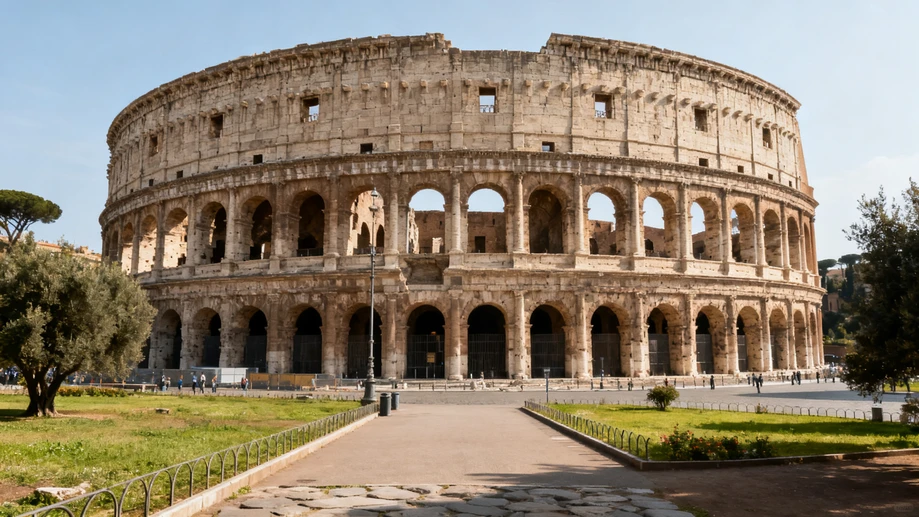
Millions of travelers walk past the tall weathered arches of the Colosseum every year, pausing to line up for selfies or wander through the restored viewing platforms, but very few are aware that the original 80 entry arches on the ground floor were designed as a zero-congestion access system long before modern event venues existed. The four widest central arches facing the main city road were reserved exclusively for imperial family members and high-ranking officials, while all remaining arches were carved with clear numerical markers. Ordinary citizens held small, cheap clay tokens as event tickets, and each token was stamped with a specific arch number that matched their assigned seating area. This strict arrangement ensured that thousands of people could enter and exit the entire venue in less than 10 minutes without bumping into crowds or crossing paths with people of higher social status, a traffic solution far more efficient than most large-scale public events hosted in the 21st century.
Contrary to popular belief that the Colosseum only hosted brutal gladiator fights, the vast network of underground tunnels and chambers beneath the stone floor hosted a bustling group of unsung workers who kept every public show running smoothly. Hundreds of wage laborers and enslaved people worked 12 to 14 hour shifts every event day, tending to wild animals held in iron cages, operating the pulley systems that lifted performers and full-sized stage sets up to the main arena, and arranging fake landscape props including artificial rocks and full size trees. They were required to finish every full scene change in the 15 minute intermission between two acts, and even a small delay would draw boos and loud complaints from tens of thousands of spectators sitting above the underground chambers.
For nearly a thousand years after the last official public performance was held at the Colosseum, the site was never treated as a protected historical landmark at all, and it played a wide range of unexpected roles in local daily life. Local residents took apart loose marble blocks and solid stone segments from the outer facade to build private houses, local churches and public bridges across the nearby river, and nearly one third of the original building materials were reused for other construction projects in the surrounding neighborhoods. For centuries, the hollow inner arena was used as a public pasture for local sheep and goats, and wandering farmers would drive their flocks into the site to feed on the wild grass growing between the cracked stone slabs, while travelers caught in sudden rainstorms would huddle under the intact arches to wait out the bad weather.
Nowadays, the site management team sticks to a low-key restoration principle that avoids excessive polishing or modern decoration on the ancient stone surfaces. Teams of professional stonemasons carry out small scale repair work every year, using local tuff rock with the exact same mineral composition as the materials used to build the Colosseum 2000 years ago, to make new repair parts blend in naturally with the weathered old stone. Peak seasons see more than 20 thousand visitors walking through the site every day, and many of them pause for a few seconds in the center of the old arena to feel the faint echoes of cheers carried by the warm Mediterranean wind, getting a quiet sense of connection to all the ordinary people who lived, worked and wandered around this iconic spot across two thousand years of history.