
A Wanderer’s Complete Introduction to Iceland’s Surreal Black Sand Beach That Feels Like Extraterrestrial Terrain
This practical travel piece unpacks the stunning scenery, unique hidden details and smart visiting tips for one of Iceland’s most famous natural landmarks.
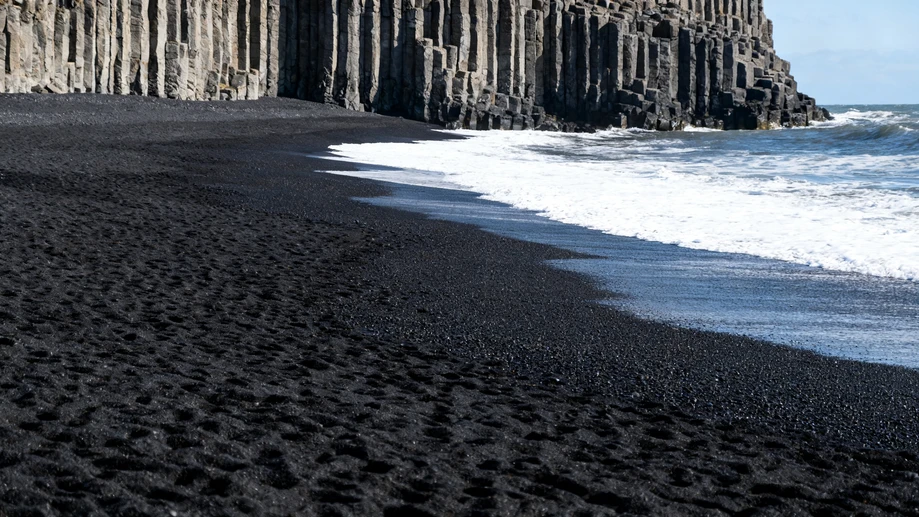
Starting from the small coastal town of Vik, you only need to drive 10 minutes along the winding paved road with the Atlantic Ocean glinting on your left to catch the first glimpse of the iconic black sand beach, and the contrast hits you before you even step out of the car. Where most coastal shorelines are lined with pale golden or cream-colored sand and dotted with light gray pebbles, this entire stretch of shore spreads out like a sheet of polished obsidian, stretching for hundreds of meters until it meets the frothy white edge of the rising tide. On sunny days, the low angle of Iceland’s polar sun casts soft highlights over every inch of the shore, making the entire beach glow with a deep, muted sheen that you cannot find in any other coastal region across the rest of Europe.
As you walk closer to the edge of the shore, you will notice the striking basalt rock formations that frame the two ends of the beach, stacked in uniform, angular column shapes that look exactly like the carved pipes of a giant ancient organ. Local folk tales have been passed down for centuries to explain the origin of these jagged rock structures, saying that they were once tall trolls that got caught in the open daylight while trying to drag nearby ships down into the frigid ocean, and turned to solid stone the moment the sun rose above the horizon. Even if you do not buy into the old folk stories, the geometric perfection of these rock formations feels far too precise to be the result of random natural erosion, and many visitors spend hours wandering around their base to trace the fine lines between each connected column.
One tiny detail that almost every first-time visitor notices within 10 minutes of stepping onto the beach is that the fine black volcanic sand never sticks to your wet ankles, socks or shoe laces, a quirk that almost no other sand beach on the planet has. This comes from the unique formation process of the sand grains: thousands of years ago, massive volcanic eruptions all across southern Iceland released enormous amounts of molten basaltic lava that poured directly into the cold Atlantic water, shattering instantly into tiny hard fragments that were then smoothed and polished by endless wave motion for tens of thousands of years. The final sand pieces have a density twice higher than the common quartz sand that makes up most regular shorelines, so they will not cling to damp skin or fabric the way normal fine sand does even after you walk through shallow tide pools.
While the beach looks calm and peaceful in most tourist photos, it is important to remember that the waves rolling towards the shore are far more powerful than they appear at first glance, and sudden sneaker waves can rush far higher up the sand line than visitors expect, dragging unsuspecting people out into the deep ocean without warning. The easiest way to stay safe during your visit is to never turn your back to the water, and always stay at least 10 meters away from the visible edge of the tide even if the ocean looks completely calm. For a far more impressive view of the entire shoreline, you can climb the low grass-covered cliff path on the left side of the beach, where you can look down over the full stretch of black sand, the tall basalt columns, and the distant sea stacks that rise straight out of the churning ocean water.
Unlike most popular beach destinations around the world, there are no beachside stalls selling cold drinks or souvenir trinkets within walking distance of the shore, no colorful seashells scattered across the sand, and no palm trees swaying in the breeze to provide shade. The whole space is dominated entirely by raw, unfiltered natural power, a reminder of how much the planet can create and transform all on its own without any human intervention. Many travelers say that after spending two or three hours wandering along the shore, they feel a strange sense of calm that they cannot get from any other crowded tourist site, as if the deep dark sand has absorbed all their scattered mental fatigue from busy city life.