
Slow unscripted detours across Yellowstone’s geothermal basins craft far more vivid travel memories than any pre-planned itinerary you map out months ahead
Walk past steaming hot springs, wander through pine forests dotted with grazing bison, and pause to watch the sky paint orange over rocky peaks far away from crowded city streets
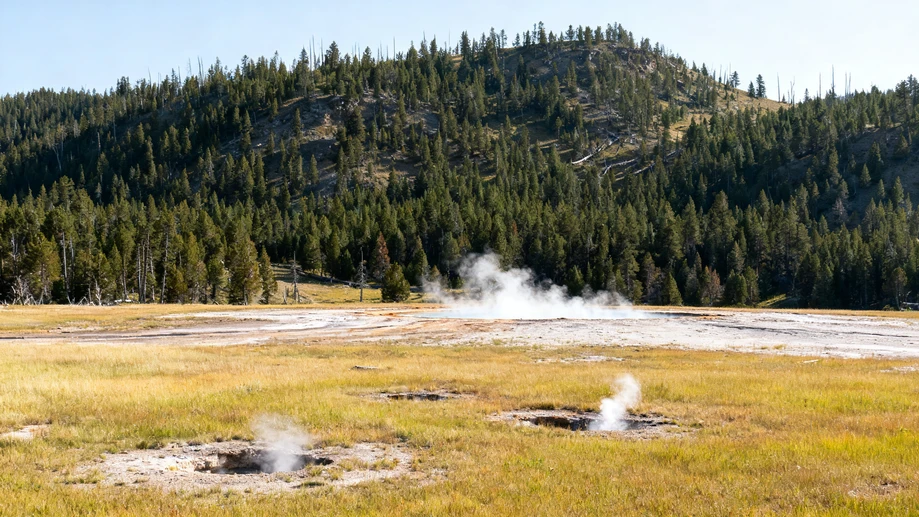
Most visitors arrive at Yellowstone with a tightly scheduled checklist of iconic stops, rushing from one boardwalk to the next to catch Old Faithful’s eruption, snap photos of Grand Prismatic Spring, and drive past the most popular overlooks before the day ends. The real magic of the park, however, never reveals itself to those who speed along the main roads with their eyes glued to navigation prompts. The moment you turn off the pre-marked route and take an unmarked side pull-off, you will notice thin wisps of steam curling up from cracks in the rocky soil right next to the pavement, a tiny reminder that you are standing on top of one of the world’s most active supervolcano systems.
When you reach the Midway Geyser Basin, skip the crowded main viewing platform that lines up hundreds of people shoulder to shoulder to catch a framed shot of Grand Prismatic Spring. Take the narrow gravel trail that climbs a gentle slope half a mile behind the parking lot, and you will be greeted with a full unobstructed view of the entire hot spring stretching across the basin, no other crowds blocking your line of sight. This is the perfect spot to learn the little-known fact about the park’s famous rainbow-colored hot springs: the vivid bands of orange, yellow, and creamy white wrapping around the deep blue central pool do not come from mineral stains as most tourists assume. The colors are generated entirely by colonies of heat-loving photosynthetic microorganisms that thrive in different temperature ranges around the spring, with each distinct shade matching a unique species that cannot survive anywhere else in the park.
Once you leave the geothermal zones and head toward the northern stretches of the park, the landscape shifts rapidly to wide open grass meadows framed by thick stands of old growth fir and pine. It is common to find a line of cars stopped on the roadside as a herd of wild bison meander slowly across the asphalt, moving at their own unhurried pace with tiny calves trotting close behind the adults. There is no rush to honk or push past them, and the 15 minutes you spend waiting in your car, watching them rub their thick fur against weathered boulders and graze on fresh spring grass, will end up being one of the moments you recall most clearly long after you leave the park.
As the golden hour light spills across the valley in late afternoon, follow a small unpaved access road that leads down to the quiet shore of Yellowstone Lake, far away from the busy marina and designated swimming zones. The water stays cool even in the middle of summer, and scattered pieces of light volcanic pumice left over from ancient eruptions line the shore, light enough to float on the surface if you toss them into the gentle ripples. Small clusters of steam rise from hidden thermal vents half submerged near the shoreline, and the sharp crisp scent of pine mixes with the faint mineral tang of geothermal steam carried on the soft breeze coming across the lake.
By the time you drive out the park gates at the end of your trip, you will likely realize you did not check off every single stop you wrote down on your original itinerary. That is not a failure, but rather the greatest gift Yellowstone offers to travelers. Every small unplanned detour, every moment you spent pausing simply to watch the landscape shift in the changing light, adds layers of texture to your trip that no pre-written travel guide could ever prepare you for, turning a standard national park visit into a collection of quiet, unforgettable moments that stay with you for years.