
Wandering slow along Yellowstone’s lesser-known paths you can uncover hidden natural marvels far beyond the overcrowded mainstream tourist stops
Bison roaming freely, rainbow hued hot springs, mist rising from silent valleys and no rushed schedules turn a casual road trip to America’s oldest national park into a deeply memorable journey you will replay in your mind for years after returning home
Most first-time visitors to Yellowstone map out rigid hour-by-hour schedules that force them to rush between famous landmarks, skipping every unmarked pull-off and quiet side trail to check iconic locations off their pre-written list. This hurried routine robs travelers of the park’s most magical gifts, the quiet, unscripted moments that pop up when you leave extra space on your itinerary to follow small, random signals from the natural world. If you enter the park through the northern gateway right as the sun crests the snow-dusted peaks, skip the direct highway route to the Old Faithful boardwalk first, and take the narrow paved side road that winds along the bank of the Yellowstone River tributary, you will see wispy curls of steam rising from the grassy banks long before you reach any formal marked geyser basin. The faint, sharp scent of mineral sulfur drifts on the cool mountain breeze here, soft enough that it does not sting your nose, and the sound of rushing cold river water mixes with faint bubbling noises coming from small hidden hot springs half-buried under clumps of wild sagebrush.
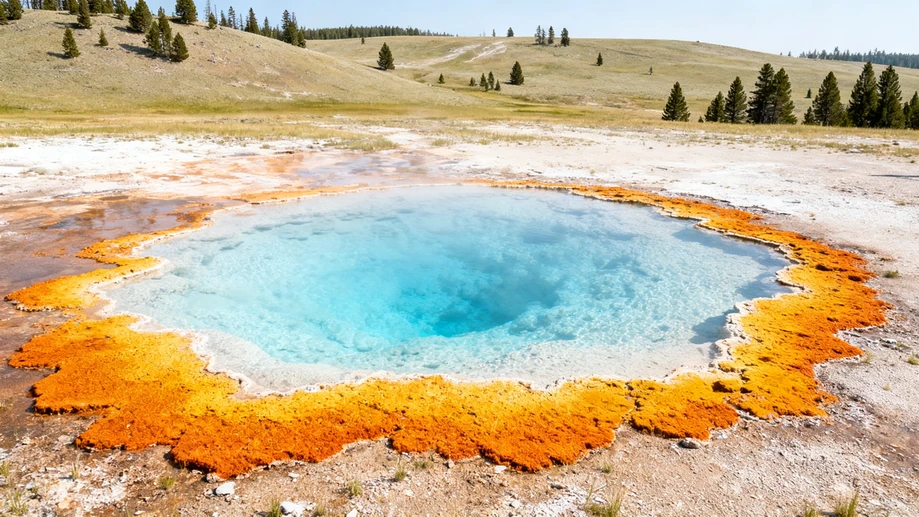
It is common for travelers to get stopped on these small side roads for 20 minutes or more when a herd of wild bison decides to wander across the paved surface, and no one honks their horns or shouts to hurry the animals along. Everyone inside the parked cars rolls down their windows to watch, as full-grown bison weighing more than a ton amble slowly past the bumpers, their thick matted fur caked with pale mineral-rich mud they picked up rolling around near warm spring patches earlier in the day. Tiny fluffy bison calves bounce and circle around their mothers, pausing every few steps to sniff at wildflower blooms poking through the short grass. It is during one of these unplanned stops that a passing park ranger mentioned the little known fact that gives Yellowstone’s hot springs their legendary rainbow palette: every band of bright orange, vivid yellow, deep purple and glowing soft blue across the surface of a thermal pool comes entirely from different colonies of heat-loving microorganisms. These tiny organisms evolved to survive in water temperatures that would scald any other form of life, and different species thrive at very specific temperature ranges, creating sharp, clear color gradients that shift as you move from the superheated center of the spring out to its cooler shallow edges. No artificial additives or rare mineral impurities create those bright colors, every shade you see is a living, thriving community of tiny life forms that have existed here for thousands of years.
As the sun dips low toward the western ridgeline of the park, you can follow a short unmarked dirt trail that cuts through a stand of old lodgepole pine trees to reach a quiet, undeveloped stretch of Yellowstone Lake shore. No boardwalks, no informational signs, no paved parking lots are visible here, and the glassy surface of the huge alpine lake stretches all the way to the base of snow-capped mountains 20 miles away. The glacial melt water feeding the lake stays near freezing even in the hottest summer months, and a small flock of white pelicans floats near the rocky shore, drifting slowly with the soft current. A handful of other quiet travelers sit on smooth weathered boulders spaced dozens of feet apart, no one talks loudly, no one plays music from portable speakers, everyone simply watches as the fading golden sun paints the surface of the lake in streaks of tangerine and soft rose. You can sit there for an hour without checking your phone, listening to the soft lap of small waves against the rocks and the distant low call of a loon drifting somewhere out across the open water.
Waking up before dawn the next day to hike a 3-mile lightly trafficked trail will lead you to a small, secluded waterfall that sees fewer than 10 visitors on an average summer day. The trail is lined with thick layers of fallen pine needles that muffle every step you take, and you might catch distant faint calls from coyotes or spot the fresh paw print of a lone elk pressed into the soft muddy patch next to a small trickling stream. When you round the final bend to see the waterfall, the bright morning sunlight hits the fine mist spraying off the falling water, creating a tiny faint rainbow that hovers over the deep clear pool at the base of the drop. You can sit on a flat smooth rock near the edge of the pool for as long as you want, with no other visitors coming along to rush you off the spot, and listen to the deep continuous roar of the water mixing with the quiet chirp of small songbirds flitting through the pine branches overhead.
By the time you drive back out of the park after three slow, unstructured days of wandering, you will not have a full photo album of every famous landmark in Yellowstone, but you will carry a collection of small, vivid memories that will stick with you far longer than any tourist snap. The entire park sits on top of a massive active supervolcano system, and every wisp of steam rising from the ground, every faint rumble you feel under your boots, every bright band of color across a hot spring is a quiet reminder that the Earth under your feet is alive, active, and constantly shifting. You do not need to rush to chase every famous stop to experience that deep, primal sense of wonder, all you need to do is slow down, leave your schedule open, and let the park show you its most beautiful hidden secrets on its own time.