
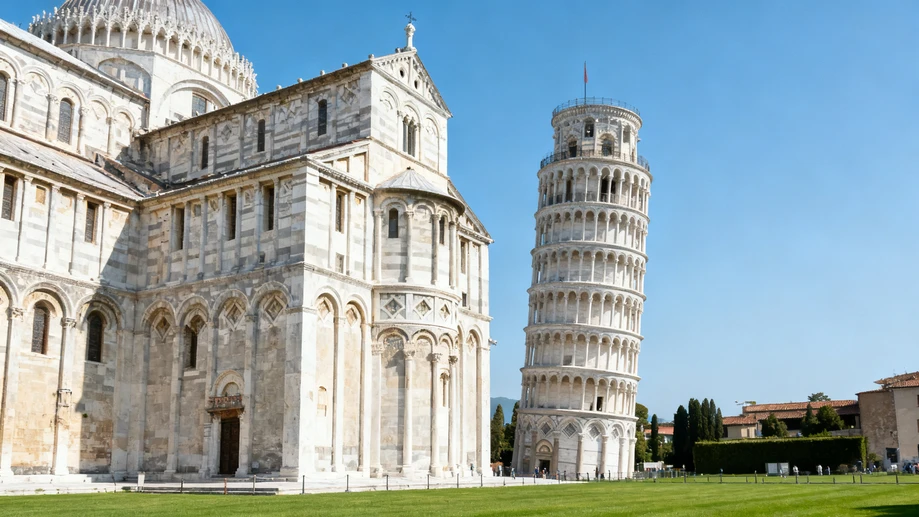
Exploring Pisa’s world-famous Leaning Tower and the little-known quirky secrets hiding across its surrounding historic square
Ditch the rushed 10-minute photo stop to wander past medieval marble carvings, taste local street food, and learn the weird engineering backstory no mainstream tour scripts ever mention
Most travelers stumble upon the Leaning Tower of Pisa completely by accident, after a short 45-minute train ride from Florence that they slot into their itinerary as nothing more than a quick photo stop. You might walk the quiet tree-lined path leading from the city’s train station, breathing in the faint scent of pine and freshly baked rosemary focaccia drifting from neighborhood bakeries, before you turn a corner of a weathered terracotta wall and catch your first glimpse of the white marble structure tilting gently against a bright blue sky. Hundreds of visitors swarm the edge of the paved grassy plaza holding their arms out in silly poses, pretending to hold up the tower or push it back into a straight position, and the whole scene feels playful and light, far less stuffy than many of Italy’s more formal historic sites. Instead of rushing to join the crowd to snap the exact same photo that every other visitor posts online, take a slow lap around the full perimeter of the tower’s surrounding site first, pausing to run your fingers over the cool, pitted marble blocks that have stood exposed to wind and rain for more than 800 years.
The vast majority of tour guides and travel articles repeat the same common fact that the tower started leaning decades after its construction was fully completed, due to gradual soil erosion under one side of its foundation. This is not true, and the tiny little known detail that almost no casual visitor picks up on makes the structure far more fascinating than most people realize. Construction first broke ground in 1173, and workers had only finished laying the final stone of the third level, when the entire structure already started to sink unevenly on its south side, because the soft layered clay under the northern edge of the foundation compressed far faster than the engineers of the era had predicted. Instead of tearing the half-built tower down entirely, medieval builders came up with a wildly clever workaround that no one mentions in standard tourist materials: for every new level they added after the third, they carved the columns and archways on the south side of the tower roughly a few centimeters shorter than the ones on the north side. This intentional design choice pulled the structure’s center of gravity slightly back toward the north, and it created a subtle curved warp along every single layer of the tower, so it does not just tilt as a straight rigid block, it has a faint gentle bend to its silhouette that looks almost like a slightly stretched banana if you squint hard enough from the far end of the plaza. It took nearly 200 years to finish constructing the full 8 levels of the tower, mostly because of repeated pauses in building work as engineers debated how to correct the tilt, and those long gaps actually gave the soft soil under the foundation time to settle more evenly, which stopped the tower from collapsing entirely before it was ever completed.
When you buy a ticket to climb the tower, do not rush up the worn smooth marble steps that have been polished glossy by millions of feet over hundreds of years. Run your palm along the thick central stone railing on the way up, and you will feel the faint indentations left by generations of visitors resting their hands there as they catch their breath halfway through the climb. The stairs spiral slowly upward around the tower’s hollow central core, and as you move higher, you will start to feel the gentle pull of the tilt shifting under your feet, a strange faint sense that you are walking downhill on the south side of the structure and uphill on the north, even when every step is exactly the same height. By the time you step out onto the open top observation deck, strong warm Mediterranean wind will blow right through your hair, and you can look out across the entire Tuscan landscape, seeing rolling golden wheat fields stretch to the hazy distant horizon and terracotta roof tiles dotting the old city neighborhoods outside the plaza. The feeling of leaning over the tower’s outer railing on the south side is wonderfully surreal, like standing inside a house that has been tilted a few degrees off level after a small earthquake, and there is no other historic structure in the world that gives you that exact same strange, delightful physical sensation.
After you climb down the tower, spend at least an hour lingering in the small side alleys tucked behind the main tourist plaza, instead of hopping right back on the train to the next city on your itinerary. The narrow cobblestone streets are lined with small family run eateries that serve hearty local dishes made with wild foraged mushrooms and tender slow-cooked pork, and most of the seating is set out on the sidewalk under the shade of twisting grape vines that drape over wooden awnings. You can order a glass of crisp local white wine and a plate of thinly sliced cured meats, and sit back to watch the light shift as the afternoon sun turns the white marble of the tower pale honey gold in the distance. Most people leave Pisa after two hours having only seen the one famous tilted structure, and they miss out on all the small quiet charms that make this small riverside city such a lovely place to slow down. There is no need to rush through every attraction just to tick it off a list, and a few unplanned extra hours wandering the quiet streets of Pisa after the crowds of day trippers leave will give you far better memories than any perfectly framed tourist snapshot could ever offer.