
Stroll Along Iceland’s Stunning Jet-Black Volcanic Shores Under the Gentle Bright Glow of Arctic Sunlight
This practical travel guide introduces the surreal natural charm of Iceland’s iconic black sand beach, along with handy visiting tips and a little-known geological fact.
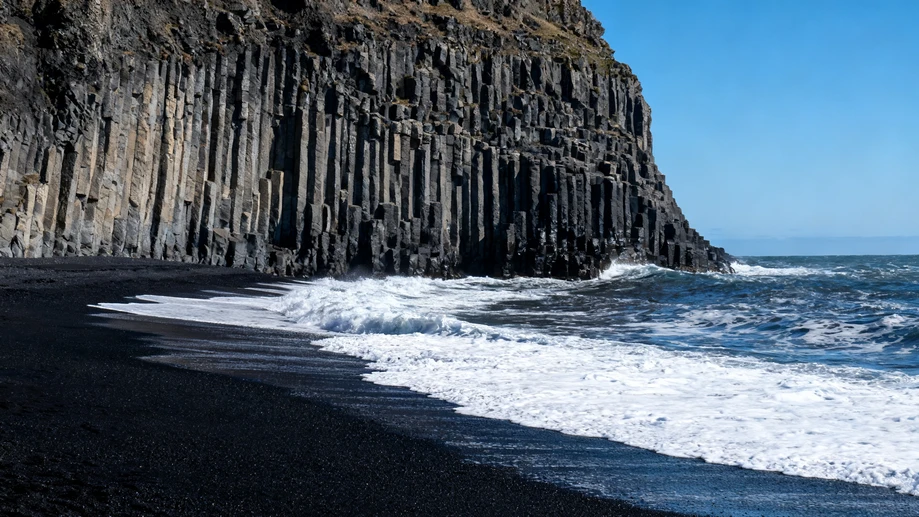
There are very few destinations in the world that can catch your breath the moment you step out of your vehicle, but Iceland’s black sand beach located a short drive from the small coastal village of Vik does exactly that. On a clear sunny day, the entire stretch of shore glows with a deep, saturated black hue that stands in sharp, almost surreal contrast against the foaming bright white Atlantic waves rolling toward the coast, and the unobscured pale blue sky stretching all the way to the horizon. You do not need to hunt for a perfect viewpoint to take in the scenery, as every angle across the shoreline delivers a dramatic, unforgettable view that feels like it was pulled straight from a sci-fi film set on a distant alien planet. Even the wind that sweeps across the shore carries a faint, crisp hint of salt and cool Arctic air, clearing away all the tiredness from the long drive across Iceland’s winding rural roads.
When you first step onto the sand, the sensation under your feet surprises most visitors at once. Unlike soft, fine golden sand that sinks a little under your weight at tropical beach destinations, the black sand here feels firm and slightly coarse, leaving only faint, shallow footprints that disappear almost completely the moment a thin layer of seawater washes over the surface. Most people do not know a small but fascinating geological fact about this special sand: it is made entirely of fragmented basalt rock that broke apart when hot lava flowed directly into the cold seawater thousands of years ago, and the hardness of these basalt granules is far higher than that of common quartz sand that forms most golden beaches around the world. Even after being hit by endless tides for millions of years, the hard basalt particles can never be worn down into smooth, light-colored fine sand, which is the exact reason the shore has retained its deep, uniform jet-black look for countless generations.
As you walk along the shoreline further, you will notice the tall, cliff-like formations lining the back of the beach, made up of perfectly stacked, straight hexagonal basalt columns that look like they were carved and arranged by a team of skilled stonemasons. These natural formations, formed when thick lava flows cooled slowly and contracted evenly underground, create a natural amphitheater effect where the sound of crashing waves echoes in soft, low roars across the entire shore. During the brightest hours of the day, the sunlight hits the edges of the basalt columns, creating faint golden highlights that add extra layers of depth to the already dramatic dark landscape. It is important to keep in mind that the waves along this stretch of coast are far stronger than they look at first glance, and sudden, unpredictable sneaker waves can rush far higher up the shore than normal tide lines, so you should never turn your back to the ocean or walk too close to the water’s edge for a casual photo.
Many visitors also take extra time to explore the areas between the beach and the basalt cliffs during low tide, when dozens of small, shallow rock pools are exposed to the sunlight, dotted with tiny, bright shell fragments and occasional translucent little shrimp that dart away when you get too close. You may also spot small bits of natural volcanic glass scattered across the sand, which glint like tiny dark gemstones when the sun hits their smooth, polished surfaces. Local conservation rules strictly forbid visitors from taking any sand, rocks or volcanic fragments away from the beach, to preserve the natural state of the fragile geological site for future travelers to enjoy, and you can face a significant fine if you are caught carrying any of these natural materials out of the protected zone.
For travelers planning a trip to this unique site, the most recommended visiting window falls between late May and early September, when the long Arctic days give you more than 18 hours of sunlight to explore every corner of the beach at a slow, relaxed pace. A pair of non-slip waterproof hiking shoes and a thick windproof jacket are absolute essentials for the trip, as the wind across the open shore can pick up very quickly even on the sunniest days. There is no need to rush through your visit, as even sitting still on a dry patch of black sand for half an hour, watching the waves roll in and out and the clouds drift slowly across the wide Arctic sky, delivers a quiet, immersive travel experience that you will not be able to find anywhere else across the globe.