
Lisbon Whispers Stories of Art and History Through Its Alfama Alleys and Atlantic Breezes
Discover hidden courtyards, golden pastries, and melancholic fado melodies in Europe's sun-drenched capital
Perched on seven hills overlooking the Tagus River, Lisbon unfolds like a weathered map of adventures with its dizzying trams, pastel-colored buildings, and streets paved with limestone cobbles that glisten under the Iberian sun. This is a city where centuries collide effortlessly; Roman ruins share neighborhoods with avant-garde street art, and Gothic cathedrals stand sentinel over bustling markets fragrant with salt cod and cinnamon. The very air here feels thick with stories, from sea-faring explorers to poets who poured longing into music. Arriving feels less like visiting a museum and more like stepping into a living, breathing poem where every corner promises a sensory delight.
Wander into Alfama, the ancient Moorish quarter, and lose yourself in its labyrinthine alleys so narrow laundry strung between balconies almost brushes your head. Listen closely and you might hear the plaintive strains of fado drifting from a tiny tavern – a UNESCO-listed musical tradition born from sailors' yearning for home. Did you know Lisbon proudly claims the title of Europe’s second oldest capital city after Athens? This fact whispers through Alfama’s very stones, where washing hangs over Phoenician-era foundations. Climb up to Miradouro da Graça for sunset views as the terracotta rooftops glow fiery orange, then follow the scent of grilling sardines to a family-run tasca serving them sizzling on crusty bread.
Cross the monumental 25 de Abril Bridge to Belém, where Portugal’s Age of Discovery still echoes in stone giants like the intricately carved Jerónimos Monastery and the Torre de Belém fortress rising dramatically from the riverbank. Pause at Pastéis de Belém, where the original recipe for Portugal’s iconic custard tart remains a closely guarded secret since 1837. Sink your teeth into the flaky pastry, its center still quivering and warm, the caramelised top crackling softly – it’s an edible piece of history. Nearby, contemporary art flourishes at MAAT Museum, its undulating rooftop offering panoramic river vistas perfect for contemplating how centuries of seafarers once gazed upon these same waters.
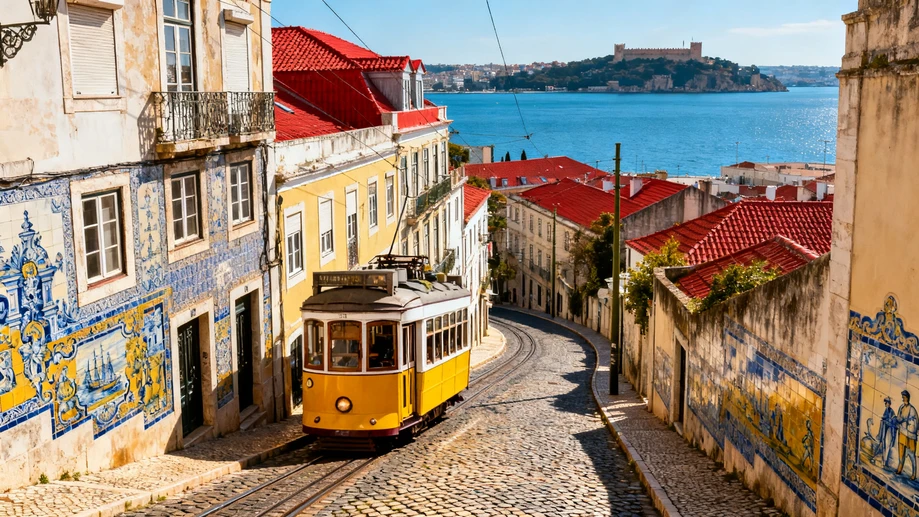
Public transport itself becomes joyful exploration aboard vintage Tram 28, rattling through steep streets lined with azulejo-covered façades depicting saints, ships, and hunting scenes. These tin-glazed ceramic tiles aren’t just decoration; they’re Lisbon’s skin, reflecting sunlight and narrating cultural tales. Seek out quieter neighbourhoods like Graça or Príncipe Real for artisan studios reviving this ancient craft, where you can watch masters paint cobalt blue patterns onto wet clay. Later, dive into LX Factory, a former industrial complex reinvented as a creative hub hosting bookshops inside shipping containers, indie boutiques, and murals exploding with colour across abandoned warehouses.
As dusk bathes the city in golden light, ride the Santa Justa Lift to witness Lisbon transform into a constellation of flickering street lamps illuminating the castle-topped hills. Nighttime invites intimacy: join locals savouring slow-cooked pork cheeks in Bairro Alto’s hole-in-the-wall eateries before finding a fado house where emotion hangs thick as smoke in the air. When your journey ends, you’ll carry more than souvenirs; you’ll hold whispered memories of tiled walls holding centuries, ocean breezes carrying song, and a resilient spirit shimmering brighter than any Atlantic sunset.