
The Secret Doorway to Amsterdam's Soul: Beyond Tulips and Canals
Unlocking the authentic charm of the Dutch capital requires looking beyond its famous icons to discover its beating heart.
Amsterdam greets you with a whispered secret carried on the breeze off the IJ waterway, a city where history isn't just preserved behind glass but lives and breathes in the very tilt of its gabled houses. Most visitors arrive clutching guidebooks pointing to the Van Gogh Museum and the Anne Frank House, essential stops undoubtedly, yet the true essence of Amsterdam reveals itself in the quieter interstices, the unexpected corners where the city simply carries on being itself. It's a place best experienced not at a sprint between landmarks, but at the gentle, meandering pace of a bicycle ride down a narrow lane, where the scent of freshly baked stroopwafels mingles with the damp, earthy smell of the canals.
Of course, traversing the city on two wheels isn't merely a tourist cliché; it's the lifeblood of Amsterdam. Locals pedal with an effortless grace, navigating the intricate web of bike paths with children balanced on handlebars or groceries piled high in front-mounted crates. Yet, to truly join the flow, one must understand the unspoken rules: keep pedaling decisively, signal turns clearly, and always, always lock your bike securely. Here lies a small, peculiar piece of Amsterdam trivia: look closely at the gables of the leaning houses lining the canals. You'll often spot sturdy iron hooks projecting from the top. These aren't decorative; they date back centuries, designed for hoisting furniture and heavy goods through the tall, narrow windows because the steep, winding staircases inside were too impractical. This ingenious solution speaks volumes about Dutch pragmatism.
While the grandeur of the Rijksmuseum and the moving power of the Anne Frank House are non-negotiable experiences, save ample time simply to wander. Escape the crowded Damrak and venture into the Nine Streets (De Negen Straatjes), a labyrinth of narrow alleyways brimming with independent boutiques selling vintage clothing, artisanal cheeses, handmade ceramics, and quirky design finds. Duck into a traditional 'brown cafe' (bruin kroeg), named for their tobacco-stained wood interiors, where the lighting is low, the beer (like a local pilsner or a rich, dark Trappist ale) is excellent, and the atmosphere is convivial. Order a plate of bitterballen – deep-fried, crispy meat ragout balls served with mustard – and soak in the genuine local buzz.
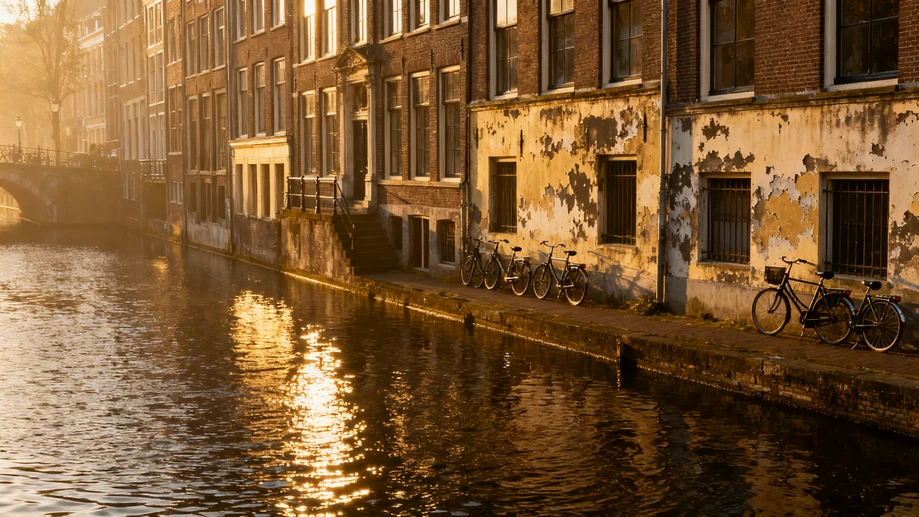
The rhythm of Amsterdam shifts beautifully with the seasons and the time of day. An early morning walk along the Prinsengracht or Herengracht, when the canals are still glassy and mist sometimes rises, feels like stepping into a Vermeer painting. The historic houses reflect perfectly in the calm water, interrupted only by the gentle wake of an early tour boat. Contrast this with the vibrant chaos of the Albert Cuyp Market in De Pijp district during the day, a sensory overload of colourful produce stalls, sizzling street food (try the raw herring with pickles and onions if you dare, or the heavenly poffertjes - mini pancakes), racks of clothing, and the constant hum of bargaining. It’s democracy in action, a microcosm of the city’s diverse population.
For a deeper layer still, seek out the hidden courtyards known as 'hofjes'. Originally built as almshouses for the elderly or poor centuries ago by wealthy benefactors, these tranquil, green oases nestled behind unassuming doors offer a moment of serene peace amidst the urban energy. The Begijnhof, accessible via a modest doorway near the Spui square, is the most famous – a hushed sanctuary with immaculate gardens and historic houses surrounding a central green, utterly removed from the bustling city just steps away. Discovering one of these hofjes feels like finding a secret shared only with the knowing few.
Amsterdam refuses to be boxed in. It is simultaneously progressive and deeply traditional, bustling and serene, internationally renowned yet fiercely local. Its soul isn't captured solely in world-famous museums or picturesque canalside selfies, but in the clatter of bike wheels on cobblestones, the aroma of Indonesian rijsttafel wafting from a tiny restaurant in the Jordaan, the quiet contemplation beside a hidden hofje, and the warm glow emanating from the windows of a bruin kroeg on a drizzly evening. To find it, you must be willing to wander, to pause, and to look beyond the obvious postcard. The doorway is there; you just need to know how to see it. The reward is an understanding of Amsterdam that lingers long after you've cycled your last path along its storied waterways.