
A Stroll Through Lisbon's Seven Hills: Where Every Corner Tells a Tale
Discover the hidden stories and vibrant culture of Portugal's coastal capital, a city that dances to the rhythm of Fado
Lisbon greets you with a warm Atlantic breeze and a kaleidoscope of terracotta rooftops cascading toward the Tagus River. Begin your ascent from Praça do Comércio, the grand riverside square where merchants once traded spices from distant colonies. As you climb winding alleys paved with limestone cobbles, the city reveals its layered history—Moorish arches beside Baroque churches, Art Nouveau cafés facing revolutionary graffiti. Each step offers a new perspective, literally and metaphorically, as Lisbon's seven hills create natural viewpoints where the glittering river seems to stitch together past and present.
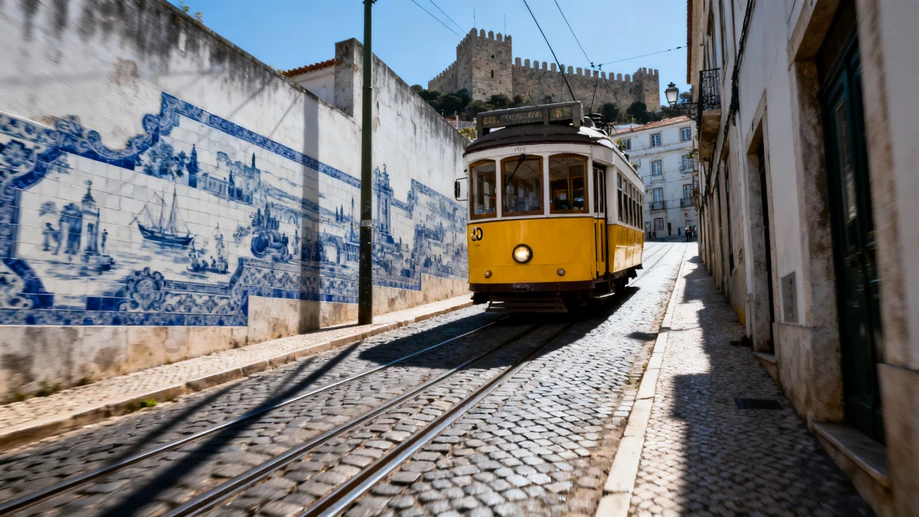
Navigating these hills becomes an adventure aboard the iconic Tram 28, its cheerful yellow frame rattling through neighborhoods like Alfama and Graça. This vintage tramway, operational since the 1930s, doubles as a moving time capsule. As it lurches uphill, pass by Sé Cathedral—Lisbon’s oldest building—where excavations revealed Roman and Visigoth ruins beneath its foundations. A little-known fact: the tram's bell uses the same distinct chime since its inauguration, a sound locals call "the heartbeat of Lisbon." Disembark near São Jorge Castle to wander through a maze of alleyways strung with laundry, where elderly residents still trade gossip through open windows and the scent of grilled sardines drifts from family-run tascas.
No exploration of Lisbon is complete without surrendering to its culinary soul. In Belém, join the perpetual queue at Pastéis de Belém for custard tarts whose recipe remains secret since 1837. The crisp, caramelized pastry gives way to a velvety filling best enjoyed with a dusting of cinnamon. For dinner, seek out Cervejaria Ramiro, where garlicky clams and tiger prawns arrive sizzling in copper pans. As twilight descends, follow melancholic guitar strains to a dimly lit Fado house in Mouraria. Here, the raw emotion of Portugal’s signature music genre—often likened to acoustic poetry—will haunt you long after the last note fades.
Beyond the historic center lies Lisbon’s creative renaissance. LX Factory, a repurposed industrial complex under the 25 de Abril Bridge, buzzes with bookshops in converted warehouses and avant-garde galleries. Nearby, the MAAT museum’s undulating ceramic facade mirrors the river waves, housing digital art installations that challenge tradition. For contrast, visit the fairytale village of Sintra just 40 minutes away. Nestled in misty forests, its pastel palaces like Quinta da Regaleira—with hidden tunnels and inverted towers—feel plucked from a Gothic novel.
Lisbon’s magic lingers in contradictions: ancient yet innovative, melancholic yet joyful. It’s a city where you’ll lose yourself willingly, only to be found again by the sound of Fado drifting through an arched window or the taste of a perfect custard tart. As locals say, "Quem não viu Lisboa, não viu coisa boa"—those who haven’t seen Lisbon haven’t seen something truly good.