
An Unforgettable Journey Awaits in Yellowstone's Wild Heart
Discover geysers painting rainbows in steam and wildlife roaming free across America's first national park
Stepping into Yellowstone National Park feels like entering Earth's living laboratory, where steam rises from cracked ground and technicolor springs bubble with otherworldly energy. Established in 1872 as the world's first national park, this Wyoming wonder spans over 2 million acres of geothermal theatrics and pristine wilderness. Roads curve past grazing bison herds while boardwalks lead visitors across thin crusts hiding volcanic forces beneath their feet. The air carries distinct scents - pine freshness mingling with sulfur whispers from hydrothermal vents - creating an immersive sensory tapestry unlike anywhere else on the continent.
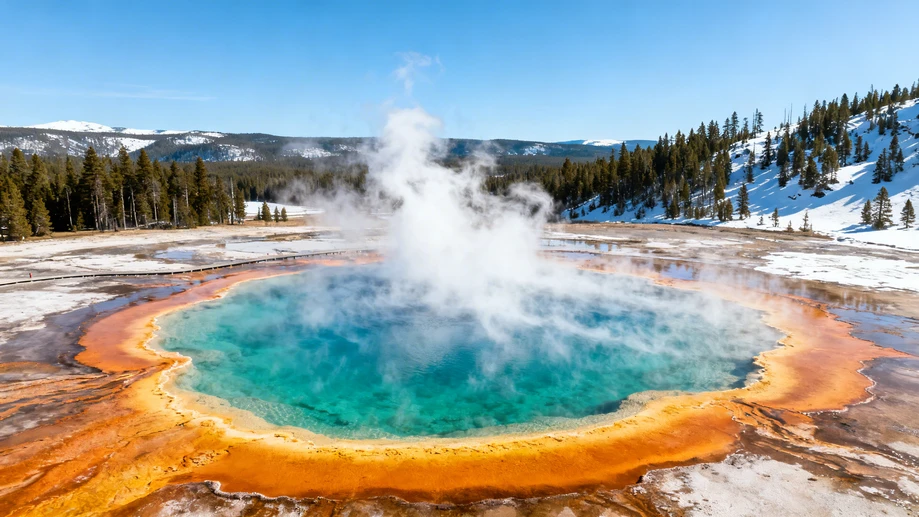
Venture along the Grand Loop Road to witness nature's most spectacular performances. At Old Faithful, crowds gather like clockwork to see the iconic geyser blast 130-foot plumes into crystalline skies with remarkable punctuality, its eruptions predicted within 10-minute windows. Nearby, Grand Prismatic Spring unveils surreal beauty with concentric rings of vivid turquoise, mustard yellow, and rust orange radiating from its steaming core - a magnificent display caused by heat-loving microbes. Few know this colorful bacteria thrives best at specific temperatures, creating shifting bands of color as water cools toward the spring's edges. For panoramic perspectives, hike the Fairy Falls Trail overlook where elevated views transform the spring into an enormous kaleidoscopic eye gazing skyward.
The park's wildlife sightings rival its geothermal wonders. Dawn reveals silhouettes of elk grazing misty meadows while riverside walks might surprise visitors with otters playfully sliding down muddy banks. Hayden Valley offers prime bison-spotting territory where these wooly giants roam in herds that frequently cause "bison jams" on park roads, reminders that humans are mere guests here. Patient observers near Lamar Valley often glimpse wolves trotting through sagebrush, their howls echoing canyon walls at dusk. Yellowstone shelters the largest concentration of mammals in the continental US, yet successful wildlife viewing demands respectful binocular-distance observation to ensure safety for both animals and humans.
Beneath Yellowstone's vibrant surface slumbers a geological titan - the Yellowstone Caldera, one of Earth's largest active volcanic systems. This supervolcano's magma chamber powers the park's 10,000 hydrothermal features, including explosive geysers, hissing fumaroles, and gurgling mud pots like the gothic Dragon's Mouth Spring. Though rumors of imminent eruption circulate, geologists confirm the volcano remains securely dormant, with most activity confined to mesmerizing surface displays. This constant geothermal activity visibly reshapes the landscape, as evidenced by Norris Geyser Basin's ever-changing terrain where new springs emerge while others vanish overnight.
Beyond predictable attractions, Yellowstone invites exploration along lesser-known routes. Cascade Creek Trail weaves through whispering conifer forests to reach hidden terraces where steaming water spills over champagne-colored formations into turquoise pools. In winter, snowshoe expeditions reveal the park transformed: frozen waterfalls cling to canyon walls while bison sport frosty beards in negative-degree temperatures. For ultimate solitude, backcountry permits grant access to remote thermal basins like Shoshone Geyser Basin, where wilderness camping under star-drenched skies offers profound connection with the park's primal essence.
Preserving Yellowstone requires conscious effort from every visitor. By staying strictly on boardwalks in thermal areas, packing out all trash, and maintaining safe distances from wildlife, travelers help protect this fragile ecosystem. The park's delicate crust can collapse unexpectedly near hot springs, and scalding water beneath thin mineral deposits poses invisible dangers. Rangers emphasize that thermal features are not swimming pools - tragic accidents have occurred when visitors ignored warnings. Responsible tourism ensures future generations will witness bison calves taking their first steps on spring meadows and geysers painting rainbows in their mist.
As daylight fades over the Yellowstone River canyon, painting cliffs in fiery hues, visitors understand why this land became the birthplace of the national park concept. Whether witnessing a lone wolf silhouetted against snowy peaks or feeling the earth tremble during a geyser eruption, Yellowstone imprints unforgettable memories. Its magic lies not just in spectacular sights but in the profound sense of connection to our planet's raw, untamed heart - a reminder that wilderness remains essential to the human spirit. This living landscape continues its ancient rhythms, inviting us to witness, wonder, and protect.