
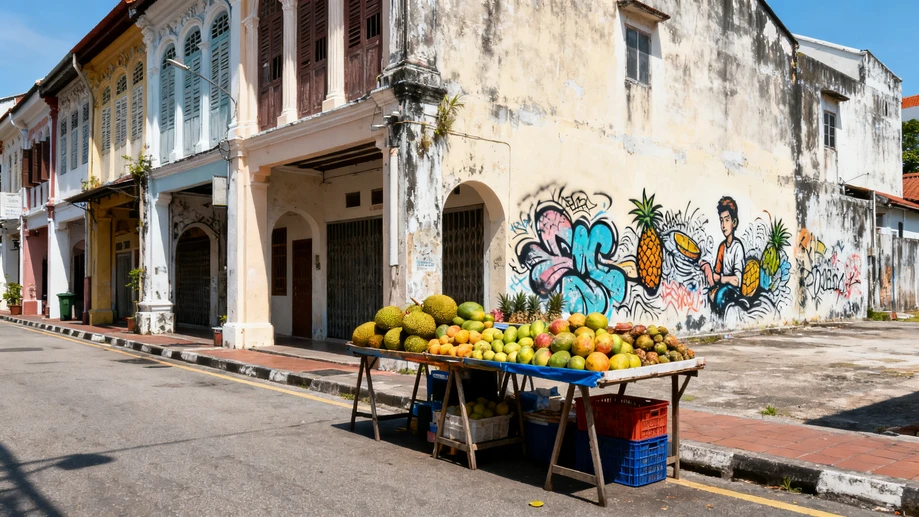
Wander the sun-dappled alleyways of Penang for unexpected slow travel joy away from overcrowded mainstream tourist traps
This laid-back northern Malaysian coastal city serves up mouthwatering street food, vivid street art and quiet historic sites that fit perfectly in a 4-day relaxed itinerary for all casual travelers
Skip the overpriced airport taxi the moment you step off the plane, and hop on the bright blue local public bus that winds through streets lined with swaying palm trees and tiny roadside fruit stalls. Most passengers will nod and greet you with a warm smile, and many stall owners will hand you a small free slice of ripe jackfruit before you even have a chance to ask, its thick, honeyed sweetness bursting across your tongue in an instant. Book a modest guest house tucked inside one of the century-old shophouses in the old town, and push open the wooden window of your room to catch the faint scent of pandan and coconut drifting from the neighboring kitchen, as well as the soft clink of ceramic teacups from the street below. There is no need to rush to tick off pre-planned spots the second you drop your luggage, the city is designed for slow wandering rather than hurried check-ins.
You do not have to chase after viral food stalls that get thousands of social media posts every week to find some of the best dishes in the whole of Southeast Asia. Walk 10 minutes from the main tourist strip to the old waterfront promenade before 8 a.m., and you will find a tiny unmarked stall serving creamy tangy laksa topped with fresh shrimp and crisp herbs, paired with cold tangy lime juice that costs less than two U.S. dollars. As the sun climbs higher, you can drift through narrow lanes looking for the scattered street murals and small iron sculptures embedded on shophouse walls, no need to pull up a pre-saved map of check-in points because the most interesting art pieces are often hidden around unmarked corners, showing playful scenes of local children playing with cats or old residents carrying bamboo baskets. When your feet start to feel sore, stop at the first char kway teow stall you run into, the wok hei seeping out of the sizzling pan will wrap around you before you even take a seat, and the chef will automatically adjust the spice level to suit tourists without you even having to mention your preference.
One little known fact about the old Penang shophouse district that most travel guides never mention is that the small, narrow drainage slots built into the bottom of nearly every shophouse wall follow a traditional construction technique brought over by early Hokkien immigrants from southern China. This clever, low-cost design lets rainwater flow into the underground drainage network immediately even during the heaviest afternoon monsoon showers, so the paved lanes will be completely dry within half an hour after the rain stops, with no puddles to step over or muddy marks to stain your shoes. After you finish learning this little detail, you can drop by the small tea shop next to the old Chaozhou guild hall, order a warm cup of frothy pulled tea, and sit by the open wooden door for an hour or two watching local elderly residents play chess on a worn wooden table. No staff will rush you to finish your drink and leave, no one will push you to buy extra souvenirs, and the soft breeze drifting in through the door will carry the light, sweet scent of frangipani flowers from the courtyard down the lane.
Rent an old-fashioned non-geared bicycle from your guest house for less than three U.S. dollars a day, and ride slowly along the quiet lanes without a fixed destination to explore the clan jetties built half over the coastal waters. The weathered wooden stilt houses are still home to dozens of local fishing families, so you just need to walk quietly along the wooden boardwalk without peeking through the open doors of private homes, and you will be rewarded with the view of fishermen sorting through their fresh catch as the midday sun glints off the shallow sea. A small stall right next to the boardwalk sells freshly grilled squid dusted with fine satay spice, its tender, smoky flavor so rich you will find yourself licking the leftover seasoning off your fingertips long after you finish eating. Stay on the shore until the sun dips low towards the horizon, and the whole sky will turn a soft shade of tangerine pink, the cool sea breeze carrying the faint salty tang of the ocean that washes away all the tiredness from riding around all day.
You do not have to pack your remaining days full of scheduled day trips to faraway scenic spots to get the most out of your time in Penang. You can set aside a whole half day to do absolutely nothing but drift through the alleys at random, and you will very likely run into an elderly vendor selling handwoven sachets on a small wooden stool, who will press a tiny hand-made pandan leaf ornament into your palm as a free gift if you take a minute to chat with her about the local weather. For a small change of scenery, you can take the slow local passenger boat from the public pier to one of the tiny unspoiled islands a short distance off the coast, snorkel for a little while to see the bright neon-colored tropical fish weaving through soft coral, then find a quiet empty rock far away from the crowded public beach to sit down and eat a bag of fresh, sweet mangosteens, their purple shells peeling open easily to reveal juicy white flesh that drips down your wrists.
When the day comes for you to fly home, you do not need to stuff your suitcase full of overpriced branded souvenirs that take up too much space. Just stop by the small street stall near your guest house to pick up a couple of packs of locally roasted white coffee and a few boxes of freshly made soft nonya kueh to eat on the flight, and you will carry a small piece of Penang’s gentle warmth back with you. Unlike most Southeast Asian cities that have been completely reshaped by mass tourism, Penang never demands you to rush or perform for a perfect social media photo, all the most unforgettable little joys here are stumbled upon by accident, rather than strictly mapped out in advance. This unplanned, low-pressure sense of freedom is the exact magic that keeps so many travelers coming back to this quiet coastal city again and again, long after they finish their first visit.