
Lisbon's Hidden Staircases Lead to More Than Just Pastel De Nata
Discover the secrets of the seven hills, where every climb rewards you with breathtaking views and unexpected delights.
Lisbon doesn't simply unfold before you; it reveals itself step by step, quite literally. Forget straightforward boulevards – this city, draped across seven iconic hills, demands exploration through a captivating labyrinth of narrow lanes and, most importantly, its countless staircases. These aren't just functional pathways; they are the city's arteries, pulsing with history and leading away from the predictable tourist trails. Each ascent promises a shift in perspective, both physically and culturally, turning a simple walk into a journey of discovery where the destination is often less important than the climb itself.
Wandering these staircases, worn smooth by centuries of footsteps, feels like traversing the spine of Lisbon's soul. You might pass under arches dripping with bougainvillea, stumble upon a tiny tiled courtyard where neighbours exchange morning greetings, or hear the melancholic strains of Fado drifting from an open window high above. The higher you climb, the more the bustling city below transforms into a mosaic of terracotta roofs and the shimmering Tagus River beyond. Suddenly, a hidden viewpoint reveals itself, offering a panorama of the cityscape and the distant 25 de Abril Bridge, a scene untouched by the crowds gathered at more accessible miradouros. This is Lisbon at its most authentic, experienced through effort and rewarded with solitude.
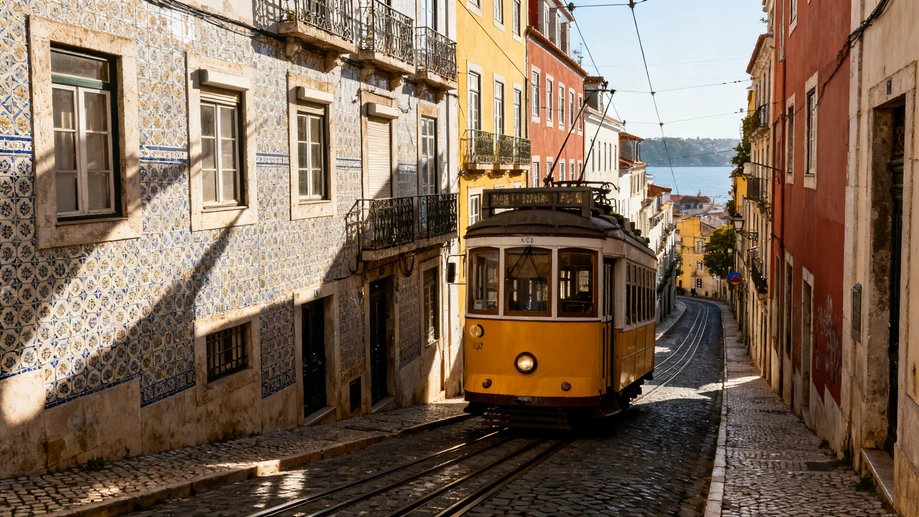
The city's relationship with elevation is deeply intertwined with its most charming transport. While modern buses and the metro exist, the soul of Lisbon moves on vintage yellow trams. These iconic Remodelado trams, particularly the legendary Route 28, clatter and sway through impossibly steep and narrow streets, defying gravity. Here’s a fascinating tidbit: Lisbon boasts one of the oldest electric tram networks in the world, inaugurated back in 1901. Riding these charming, often crowded, relics is an adventure in itself, offering a rolling tour past historic churches, bustling markets, and grand plazas, all while clinging to polished wooden benches as the tram navigates gradients that would challenge a mountain goat. It’s public transport as a thrilling historical experience.
Beyond the trams and tiles, Lisbon's true magic unfolds in its neighbourhoods, each with a distinct character revealed through persistent exploration. Alfama, the oldest district, is a maze of medieval streets where the scent of grilled sardines mingles with the sound of Fado. Bairro Alto transforms at night, its steep streets buzzing with intimate bars and restaurants spilling laughter onto the cobbles. Graça offers perhaps the most stunning sunset views, while Belém, flatter and grander, houses monumental testaments to Portugal's Age of Discoveries. Each area, connected by those ever-present stairs or a tram ride, offers a different facet of the city's complex personality, demanding time to linger over a strong bica coffee and a warm, custard-filled Pastel de Nata.
Ultimately, Lisbon rewards the curious and the patient. It asks you to slow down, to embrace the climb, to get delightfully lost. Its beauty isn't just in the grand monuments or the famous custard tarts, but in the unexpected moments found on a quiet stairway, the view from a hidden terrace, the rhythm of daily life observed from a tram window, and the warm glow of the city lights spreading across the hills as evening falls. It’s a city that whispers its secrets to those willing to listen, one step at a time.