
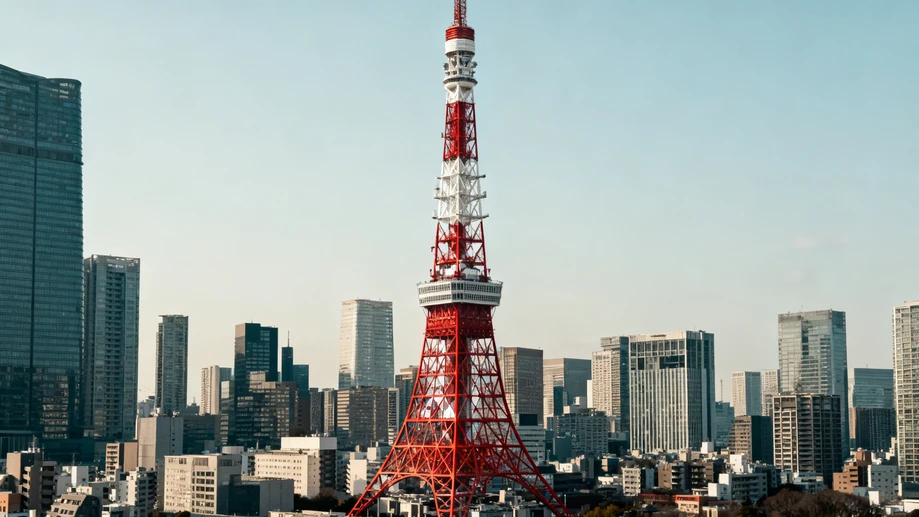
The Tokyo Tower Shines Brighter Than You Might Imagine
Beyond its iconic silhouette this structure unveils hidden depths that transform sightseeing into profound cultural discovery
Piercing Tokyo's skyline at 333 meters, the crimson-and-white lattice of Tokyo Tower dominates the urban panorama with unexpected grace. Though frequently overshadowed in height by modern skyscrapers, its lattice framework – inspired by Paris’s Eiffel Tower yet unmistakably Japanese – creates a visual haiku against the clouds. Visitors approaching from Azabu-Juban district find themselves craning their necks earlier than anticipated as the structure reveals itself piecemeal between gleaming office towers. This deliberate unveiling mirrors how Tokyo Tower operates not just as a landmark, but as a cultural storyteller for those willing to look beyond postcard views. Its presence encapsulates Japan's remarkable post-war renaissance while simultaneously serving as a contemporary beacon of tradition.
While the exterior dazzles, ascending to the Main Observatory unlocks Tokyo's soul laid bare. Glass elevators whisk visitors 150 meters skyward where suddenly the sprawling metropolis reveals its intricate patterns. To the east, miniature Shinkansen bullet trains snake towards Yokohama; westward, the Imperial Palace grounds form an emerald oasis amidst concrete. On exceptionally clear days, distant Mount Fuji materializes like a phantom on the horizon. Yet the true magic unfolds after sunset when Tokyo ignites into a galaxy of artificial stars. Unlike generic observation decks globally, here informational displays highlight how specific illuminated neighborhoods – Shinjuku’s neon canyon or Roppongi’s art-clustered glow – narrate Tokyo’s evolving identity. Interactive telescopes reveal hidden shrines nestled between skyscrapers, illustrating Japan’s unique blending of old and new.
Digging beneath the panoramic thrills uncovers the tower’s astonishing historical significance. Constructed in 1958 from salvaged US tank metal – a symbolic gesture transforming war remnants into cultural pride – it became Asia’s tallest structure during Japan’s economic miracle. For decades its transmission antennas broadcasted hope literally through the airwaves, carrying everything from sumo tournaments to royal wedding broadcasts into millions of homes. Curiously, the tower’s vibrant orange hue isn’t merely aesthetic; aviation regulations mandated its distinctive "international orange" color for aircraft visibility. During renovations, meticulous repainting involves workers suspended by ropes like mountaineers scaling a steel giant. Few structures so poetically embody a nation’s resilience and inventiveness as this technological marvel does.
Intriguing surprises await beyond the observation levels too. Descend instead to Foot Town at the tower’s base where an aquarium filled with luminescent jellyfish casts ethereal blue light – a mesmerizing contrast to the city’s glare. Nearby, plastic replicas of Japanese comfort foods like ramen and melon pan in the souvenir shop showcase delightful kitsch. Time your visit for one of the seasonal illuminations when the tower transforms: cherry blossom-pink LEDs in spring, cooling blue waves during summer, or fiery autumn maple hues. The most unexpected discovery? A miniature Shinto shrine tucked discreetly at the tower’s foundation where workers pay respects before ascending. This blend of sacred tradition with futuristic ambition perfectly captures Japan’s essence.
Ultimately, Tokyo Tower transcends typical tourist attractions by becoming a living canvas reflecting Japan’s soul. More than photography backdrop or telecom hub, it measures cultural weather. Its nightly illuminations signal environmental awareness campaigns or national celebrations – glowing gold for Olympic victories or green for ecological initiatives. Locals still refer to meeting points as "near the tower" decades after newer landmarks rise, proving its enduring psychological footprint. Whether witnessing newlyweds taking portraits against its lattice or spotting its reflection in a puddle after rain, the tower continuously reveals fresh perspectives. To experience it is to understand how Japan honors its past while perpetually reinventing its future.