
Venice Whispers Tales of Canals and Centuries Beneath Its Bridges
Navigating the liquid heart of Italy reveals secrets sculpted by saltwater and survival against impossible tides
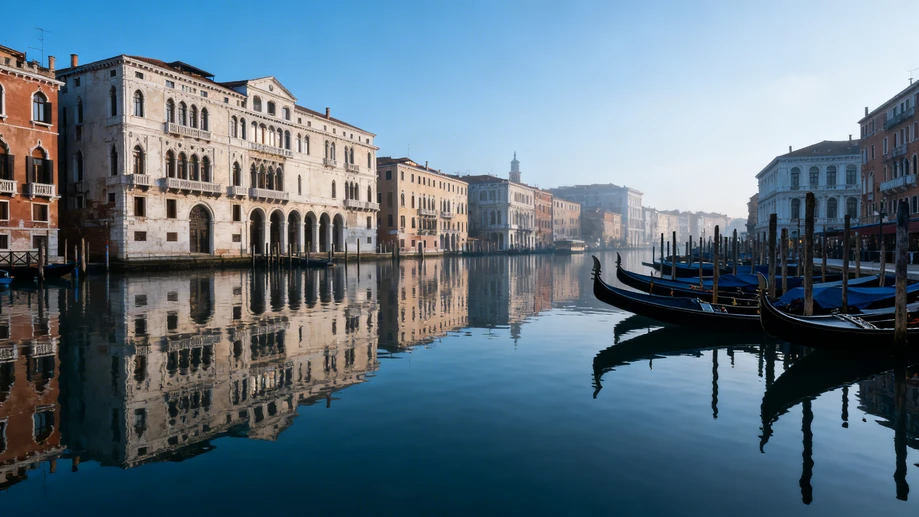
Water defines Venice with such absolute authority that stepping onto its islands feels like trespassing into an aquatic kingdom. The Adriatic’s turquoise embrace isn’t merely surrounding the city; it pulses through marble-clad palazzos and ripples beneath centuries-old bridges like liquid veins. Morning mist often surrenders to reveal a spectacle: sunlight dancing on canals where reflections of ornate balconies merge with actual architecture, creating a dreamlike double-city. Here, history floats. Every wave-lapped staircase tells of merchant princes and Marco Polo’s departures, while acqua alta floods transform familiar streets into startling mirrors, reminding all that Venice remains in delicate negotiation with the sea.
No Venetian journey truly ignites until one confronts the splendor of Saint Mark’s Square. Pigeons swirl around the Byzantine domes of the basilica where golden mosaics depict biblical stories with celestial glitter, outshining even the noonday sun. Climbing the campanile rewards visitors with a heart-stopping panorama—a red-tiled sea of rooftops threaded by canals that curl like silver ribbons towards the lagoon. Beside the Doge’s Palace, stone lions guard portals where Renaissance politicians once decided fates over whispered intrigues. The square breathes layers of time: café orchestras play Vivaldi while tourists trace the same flagstones where Cassanova evaded capture and Napoleon reportedly called it "Europe’s finest drawing room."
To understand Venice, one must surrender to its liquid highways aboard a gondola. These sleek, ebony vessels slice through narrow rii with impossible grace, piloted by gondoliers whose rhythmic rowing seems encoded in Venetian DNA. Notice every gondola shares the same profound black hue—a deliberate choice mandated by a 16th-century decree to curb extravagance among noble families competing with gilded barges. Today, that blackness becomes a moving silhouette against pastel palaces, allowing glimpses into private courtyards where laundry flutters like festive banners and geraniums spill from windowsills. The gentle lap of water against centuries-old brickwork provides the city’s eternal soundtrack.
Connecting the Doge’s Palace to ancient prisons, the Bridge of Sighs offers more than postcard perfection. Its barred windows witnessed prisoners’ final glimpses of lagoon light before incarceration. Though romanticized by poets, its true power lies in symbolizing Venice’s complex duality—beauty intertwined with harsh justice. Modern visitors may contemplate this juxtaposition while exploring Dorsoduro’s quieter alleys, where artisan shops sell handcrafted carnival masks, each a silent storyteller of Venetian revelry and disguise. Around dimpled corners, bacari wine bars beckon with cicchetti: tiny, exquisite seafood bites paired with ombra—a local white wine named for its "shade" of flavor.
Venice’s resilience shines brightest beyond the main islands. Hop a vaporetto to Murano, where glass furnaces have glowed since 1291 when fire-risk workshops were exiled here. Master glassblowers transform molten silica into impossible sculptures—delicate seahorses, chandeliers dripping like frozen honey—using techniques unchanged for generations. Nearby Burano explodes in a chromatic symphony: cottages painted in lime, fuchsia, and cobalt, a tradition reportedly born so fishermen could identify homes through fog. The lace-makers here produce threads so fine, legends claim their needles were dipped in moonlight. These islands prove Venice isn’t a museum but a living mosaic of craftsmanship.
Beneath the romance murmurs an urgent reality. Acqua alta floods grow more frequent, and marble steps once ascending to palazzos now descend into brackish water. Innovative engineering like the MOSE flood barrier project demonstrates Venice’s defiant spirit, yet walking elevated platforms in flooded Piazza San Marco feels surreal—a temporary dance above rising tides. Restoration efforts constantly battle salt erosion on frescoed walls, while locals debate sustainable tourism passionately over spritzes at sunset. This tension between ephemeral beauty and endurance defines modern Venice.
The city’s true magic lies not in escaping time but in feeling its layers. Sunset transforms the Grand Canal into liquid gold as silhouetted gondolas drift beneath the Rialto Bridge. Church bells echo over water where Casanova once sailed, mixing with laughter from hidden courtyards. Venice teaches that fragility can cultivate strength; that water, enemy and lifeblood, shapes stories worth preserving. As moonlight etches shadows on Byzantine mosaics, one realizes some cities don’t merely occupy space—they breathe through the centuries in every wave’s whisper.