
Prague Is Not Overrated: Why the Crowds Can't Dim Its Magic
Beyond the tourist throngs lies a city where every cobblestone whispers stories of alchemists and revolution
Let's address the Prague paradox straight away: yes, it's popular, often crowded, and firmly on the tourist trail. But dismissing it as merely 'over-touristed' is like calling a symphony 'over-noted'. The sheer, undeniable magic woven into Prague's very fabric – its Gothic spires piercing the sky, its Baroque facades glowing golden in the afternoon sun, the Vltava River reflecting centuries of history – possesses an alchemy that transcends the presence of fellow travellers. The crowds are a reality, yet they become mere background noise when you stand awestruck beneath the towering presence of St. Vitus Cathedral or lose yourself in the labyrinthine alleys of Mala Strana.
Wandering Prague is akin to stepping into a living storybook. Forget rigid itineraries; the true joy lies in purposeful meandering. Start early, before the day-trippers descend, and trace the path of kings across the Charles Bridge. While the iconic statues lining the bridge are magnificent, pause instead to feel the worn smoothness of the 14th-century stone underfoot and watch local artists set up their easels as the morning mist lifts off the river. Look for the small brass cross embedded near the statue of St. John of Nepomuk – touch it for luck, as legend dictates. Then, deliberately get lost in the Lesser Town. Climb the steep, winding Nerudova Street, named for the writer Jan Neruda, its pastel-hued houses adorned with intricate historical signs depicting eagles, golden chalices, or three violins, each marking a tradesman's abode centuries ago.
Prague Castle isn't just a building; it's a sprawling, hilltop village dominating the skyline, a potent symbol of Czech power and resilience. Allocate ample time. Explore the surprisingly intimate Golden Lane, a row of tiny, colourful 16th-century houses once home to castle goldsmiths and later, famously, Franz Kafka. Feel the weight of history in the vast Vladislav Hall, where knights once jousted on horseback. But the most profound moment might come in the quiet corner of St. Vitus Cathedral: find the Art Nouveau stained-glass window designed by Alfons Mucha, a vibrant explosion of Slavic saints and history, bathing the stone floor in ethereal blues and reds. It’s a 20th-century masterpiece nestled within a Gothic giant.
To experience Prague like a local requires embracing its cafe culture and hearty cuisine. Escape the main squares for the quieter streets of Vinohrady or Zizkov. Find a traditional 'kavarna', order a strong Czech coffee and a slice of 'bublanina' (cherry sponge cake), and simply observe. Later, seek out a classic 'hospoda' (pub) for the essential experience: a frothy pint of world-class Czech Pilsner, arguably the nation's liquid gold. Pair it with robust local fare – perhaps tender roast duck with braised red cabbage and dumplings ('knedliky'), or the comforting 'svickova', marinated beef sirloin in a creamy vegetable sauce with cranberries and more dumplings. It’s food designed for fortification against the Bohemian chill and for sharing long conversations.
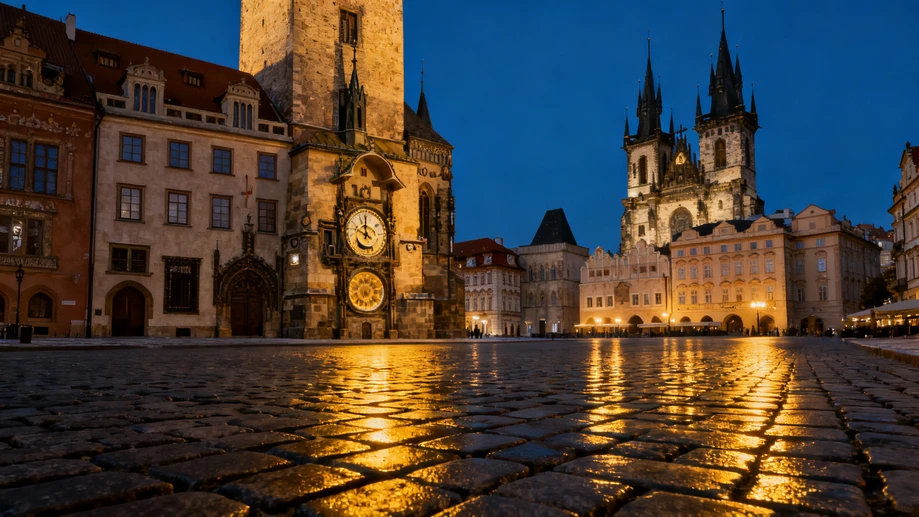
Prague holds secrets in plain sight. A fascinating, slightly macabre one involves the Old Town Hall's Astronomical Clock. While crowds gather hourly for the procession of the Twelve Apostles, few know the darker legend surrounding its creation. Master clockmaker Hanus was commissioned to build this marvel in the early 15th century. Upon its completion, the city councillors, fearing he might replicate its wonder elsewhere, allegedly had him blinded. In a final act of vengeance, the story goes, Hanus sabotaged the intricate mechanism, ensuring only he could repair it, plunging the clock into silence for decades. Whether entirely true or not, it adds a layer of poignant drama to the clock's enduring tick.
Ultimately, Prague’s magic isn’t fragile; it’s resilient, woven deep into its stones and the spirit of its people. It survived Habsburg rule, Nazi occupation, and Communist repression, emerging with its soul remarkably intact. The crowds ebb and flow, but the city’s core beauty – the play of light on the river at dusk, the haunting melodies drifting from a church door left ajar, the quiet dignity etched on the faces in a local pub – remains constant, waiting patiently for the observant traveller to discover it anew. Its enchantment isn't diluted by popularity; it's amplified by the sheer weight of its enduring story.