
The Whispering Stones of Seville's Cathedral Hold Centuries of Secrets
Unravel the mysteries hidden within the world's largest Gothic cathedral where history echoes through every archway.
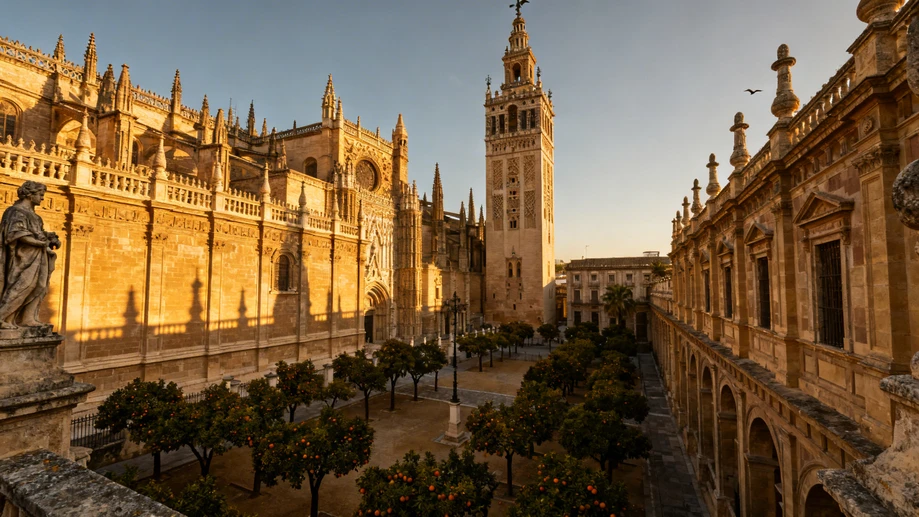
Beneath the Andalusian sun, Seville Cathedral rises like a petrified mountain against the blue sky. As the largest Gothic cathedral globally, its sheer scale overwhelms first-time visitors – you could fit entire neighborhoods within its cavernous nave. Unlike most European cathedrals built over generations, this colossal structure was completed in just over a century, a testament to Seville's golden age wealth. Work began in 1401 on the site of a former mosque, with legend claiming the council declared: "Let us build a church so beautiful and so grand that those who see it finished will think we were mad."
Transitioning from Islamic to Christian architecture created fascinating hybrids visible throughout. The most striking is La Giralda, the iconic bell tower originally built as a minaret in 1198. Rather than destroying it, architects incorporated the Moorish tower into their Gothic design. Visitors climb 35 ramps wide enough for guards on horseback rather than stairs, emerging to panoramic views where the Guadalquivir River winds through orange tree-lined streets like a silver ribbon. From this vantage point, the cathedral's flying buttresses resemble stone ribs embracing the building.
Step inside and light filters through 15th-century stained glass in kaleidoscopic patterns across marble floors worn smooth by pilgrims. Among countless chapels, one monument commands attention: Christopher Columbus's tomb. Four larger-than-life figures representing medieval kingdoms carry the explorer's coffin on their shoulders. Here lies a curious historical footnote – although the tomb proclaims him as Columbus, DNA evidence suggests only part of his remains reside here while others rest in the Dominican Republic. Still, the symbolic power remains undeniable.
Beyond the main sanctuary, hidden courtyards whisper stories seldom found in guidebooks. In the Sacristía de los Cálices, an altarpiece displays the "Virgen de la Sede" whose crown contains one of the cathedral's most bizarre treasures: a thorn supposedly from Christ's crucifixion crown embedded within the jewels. Another unusual detail hides in the Chapter House – wooden carvings on choir stalls feature mischievously carved monkeys, grapes, and dragons amidst biblical scenes, medieval craftsmen's subtle rebellion against solemnity.
The cathedral breathes history with every carved capital and vaulted ceiling. During restoration work, workers discovered 17th-century graffiti etched onto upper walls by laborers – crude drawings of galleons and names frozen in time. As twilight stains the sky crimson, shadows lengthen across the Patio de los Naranjos where fragrant orange trees bloom. At closing time, when crowds disperse and footsteps fade, stone guardians seem to relax. Then the true magic happens: the golden light of sunset sets the Giralda aflame, and for a few transcendent moments, six centuries dissolve like mist over the Guadalquivir.