
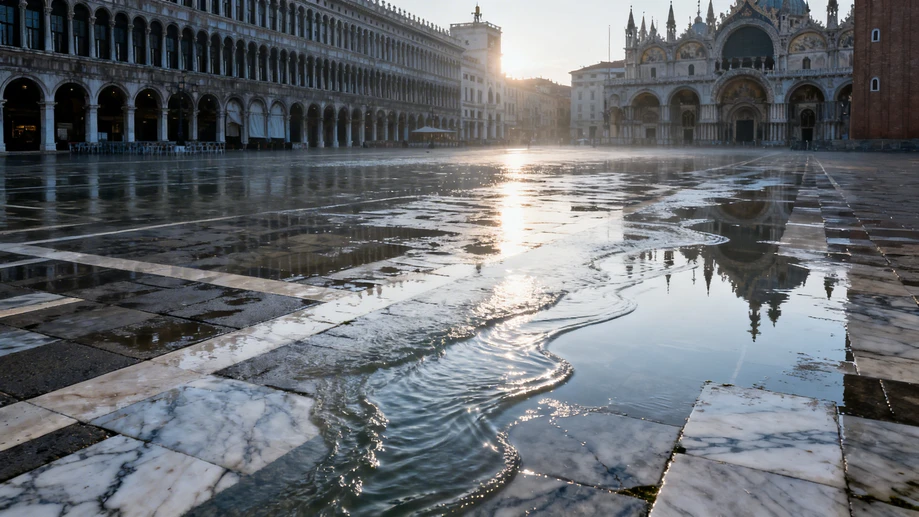
The Hidden Rhythm of Venice's Heartbeat St Mark's Square Revealed
Beyond gondolas discover how this iconic piazza pulses with centuries of history art and acqua alta secrets
Venice, that impossible city adrift on the Adriatic, concentrates its very soul into one extraordinary public space: St. Mark's Square. This isn't merely a plaza; it’s the nerve center, the drawing room of Europe, a vast open-air museum humming with a life uniquely Venetian. Arriving here, whether from the Grand Canal's watery gateway or the winding maze of calli, feels like stepping into the heart of a living organism. The sheer scale, the harmonious yet eclectic architecture – Byzantine domes brushing against Gothic pinnacles and Renaissance arches – instantly overwhelms. It’s a stage where history played out, where empires paraded, and where today, the world gathers, sipping espresso under the gaze of winged lions.
History whispers from every stone. Imagine the ground beneath your feet, paved in trachyte and Istrian marble, laid centuries ago. Once a modest orchard ground beside St. Mark's original chapel, the Square evolved over hundreds of years, shaped by Doges and architects into the grand 'Piazza' we see and its adjoining 'Piazzetta'. The magnificent Basilica di San Marco itself, shimmering with golden mosaics, is a treasure chest plundered from Constantinople. Next to it, the Doge's Palace, a pink-and-white marble marvel, speaks of political intrigue and maritime power. The soaring Campanile, rebuilt faithfully after its 1902 collapse, offers the city's most iconic view. Even the Procuratie buildings, lining the long sides, resonate with the administrative might of the vanished Republic. Together, they form an architectural symphony orchestrated through time.
Yet, St. Mark's Square is far more than a static monument. It possesses a dynamic rhythm, shifting with the hours. Dawn bathes the piazza in soft, golden light, ideal for photographers capturing its grandeur without the throngs. Pigeons, once iconic residents now gently discouraged, still occasionally flutter near the arches. By mid-morning, the orchestra of tourism tunes up: the shuffle of feet on stone, the murmur of countless languages, the clink of glasses from historic cafes like Florian (established 1720). Patrons soak in the atmosphere, perhaps listening to dueling orchestras fill the air with Vivaldi and swing tunes as twilight descends. Children chase fleeting shadows, while couples glide across the stones, momentarily escaping the press of the crowd.
Here lies a fascinating, less obvious secret: the Square's intricate relationship with the very sea that sustains Venice. Notice the pavement. It isn't entirely flat. There's a subtle, almost imperceptible rise towards the Basilica. This is no accident. One often encounters the phenomenon known locally as 'acqua alta' – high water. When strong sirocco winds push tides into the lagoon, seawater bubbles up through the drains and floods the lowest points. Did you know? The flooding pattern often forms a temporary, shallow 'river' flowing diagonally across the Square, following its ancient slight slope. Locals navigate these temporary lagoons with pragmatic grace, donning rubber boots or using elevated walkways. This dance with the tide is a stark reminder of Venice’s fragile existence and ingenious adaptation.
St. Mark's Square, therefore, transcends being a mere collection of stunning buildings. It is the vibrant, ever-changing core of Venice. It offers not just visual splendor but an immersive sensory experience – the echo of footsteps on ancient stone, the salty tang of the lagoon air mixing with coffee, the play of light on golden mosaics, the resilience embodied in coping with acqua alta. It captures the city's paradoxes: monumental yet intimate, historical yet vibrantly alive, powerful yet vulnerable to the sea. To stand in St. Mark's Square, especially as the crowds thin and the lights begin to glow, is to feel the profound, enduring pulse of La Serenissima herself. This piazza isn't just seen; it’s profoundly felt, a place where past and present, land and water, spectacle and daily life converge in an unforgettable embrace.