
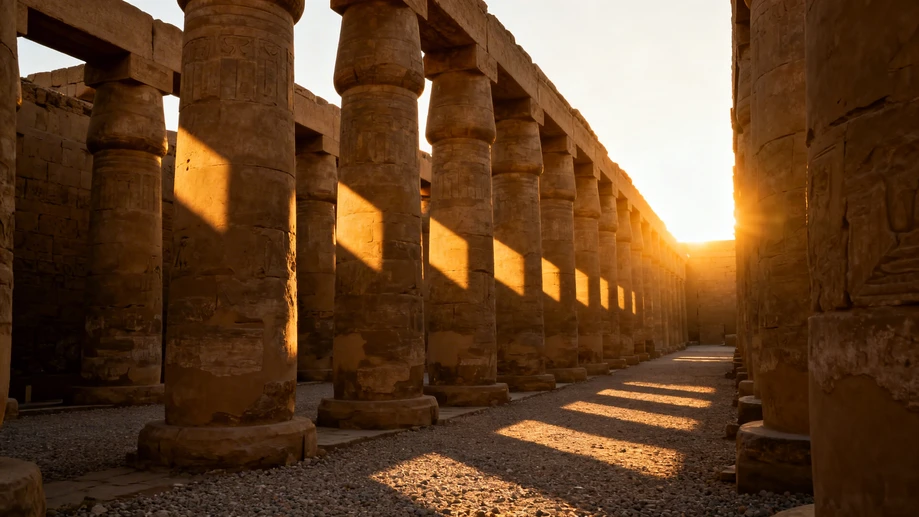
Walking Through Time Where Pharaohs Once Stood in Luxor Temple
Discover the Eternal Stories Carved in Sandstone Beneath Egypt's Golden Sun
As the Nile River whispers ancient secrets, Luxor Temple rises from the east bank like a sandstone dream frozen in time. Unlike many Egyptian monuments isolated in deserts, this UNESCO World Heritage site stands proudly within the modern city, its colossal statues and towering pillars watching over bustling markets and feluccas sailing by. Entering through the Avenue of Sphinxes – a 2.7-kilometer corridor once connecting it to Karnak Temple – feels like stepping through a portal. The sheer scale overwhelms: 25-meter-high columns carved with lotus blossoms support ceilings where stars once glittered in painted heavens, while hieroglyphs dance across every surface, telling tales of gods and pharaohs for those who understand their silent language.
Transitioning from the sun-drenched courtyard into the dim inner sanctum, the air cools and time compresses. Here, in the temple's heart, Alexander the Great added his own chapels alongside Ramses II's colossal statues. The walls breathe history: scenes of Opet Festival processions show priests carrying sacred barges, while Amenhotep III's birth chamber reveals his divine origin story carved in delicate relief. Notice how the floor gradually inclines toward the holy sanctuary – a deliberate architectural trick creating psychological awe as visitors approach the gods' domain. This sacred geometry demonstrates how every stone served both spiritual purpose and political propaganda, reinforcing pharaohs' god-kings status.
One fascinating detail often missed is the temple's astronomical alignment. During the summer and winter solstices, sunlight penetrates the central axis to illuminate specific statues in the inner chambers. Modern archaeologists discovered this intentional design allowed sunlight to crown the statue of Amun-Ra at dawn on these pivotal days, symbolizing the sun god renewing the pharaoh's divine right to rule. Such celestial choreography reveals the sophistication of ancient architects who transformed stone and light into theological theater.
As evening descends, Luxor Temple undergoes its most magical transformation. Solar-powered lights now bathe the sandstone in amber hues, casting elongated shadows that make hieroglyphs appear animated. The night unveils hidden layers: Roman frescoes beneath Coptic Christian carvings, Islamic prayer niches beside Pharaonic reliefs – a visual timeline of civilizations that repurposed this sacred space. Walking the illuminated colonnades at night, with the Nile breeze carrying distant muezzin calls, connects you to millennia of pilgrims and conquerors who stood equally awestruck beneath these same stars.
Preservation efforts face constant challenges from groundwater, salt crystallization, and urban expansion, yet new technologies offer hope. Recent laser scans revealed hidden chambers behind walls, while AI-assisted hieroglyph translations decode forgotten rituals. As you trace your fingers over Ramses II's cartouche or sit where Cleopatra once worshipped, remember this temple's endurance mirrors Egypt's own resilience. It survived sandstorms, religious transformations, and Napoleon's cannons – its stones still teaching us that true grandeur lies not in permanence, but in the courage to endure.