
Uluru Glows Crimson as the Australian Desert Whispers Ancient Secrets
Editorial Team
VerifiedSenior Correspondent
Uluru Glows Crimson as the Australian Desert Whispers Ancient Secrets
Discover the spiritual heartbeat of Australia's Red Centre where geology and Aboriginal culture collide in breathtaking harmony
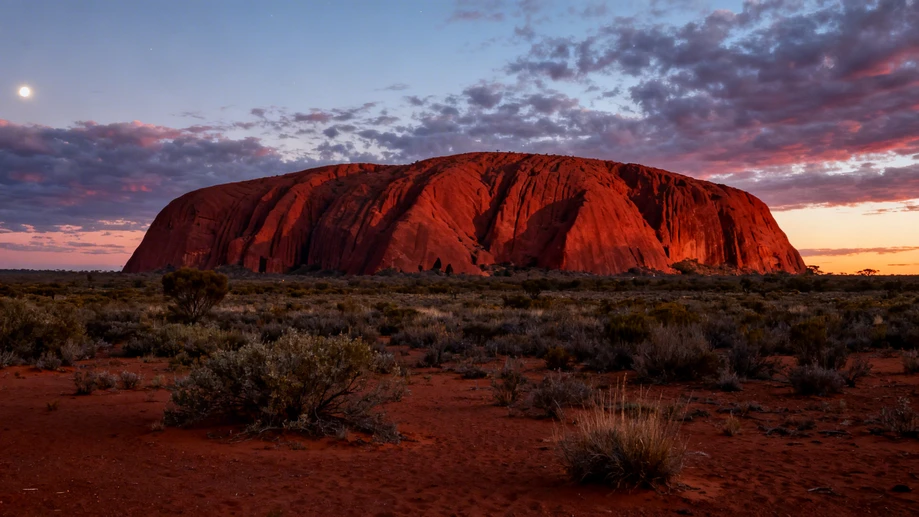
Rising abruptly from the rust-red sands of the Northern Territory, Uluru stands as a geological marvel that defies imagination. This sandstone monolith stretches 348 meters skyward – taller than the Eiffel Tower – with most of its bulk hidden beneath the earth. For over 550 million years, wind and rain sculpted its iconic curves and crevices, creating a natural fortress that dominates the flat horizon. Visitors often report feeling dwarfed not just by its physical presence but by the palpable sense of timelessness that envelops the site. The surrounding desert landscape, dotted with resilient spinifex grasses and desert oaks, forms a stark contrast to the rock's imposing silhouette.
Approaching Uluru at dawn reveals its most magical transformation. As the first golden rays strike the surface, the monolith undergoes a daily alchemy, shifting from bruised purple through fiery ochre to a blazing crimson. This daily spectacle draws silent crowds to dedicated viewing platforms, where the only sounds are camera shutters and awed whispers. Walking the 10-kilometer base trail provides intimate encounters with sacred waterholes like Mutitjulu, where ancestral beings created the landscape according to Aboriginal Dreamtime stories. Rangers from the local Anangu people lead interpretive walks, pointing out rock art galleries depicting creation ancestors like the Mala hare-wallaby people.
The cultural significance of this site cannot be overstated. To the Anangu, traditional custodians for over 30,000 years, Uluru isn't scenery but a living library of Tjukurpa (creation law). Certain sections remain off-limits to photography out of respect for sacred knowledge, particularly areas associated with gender-specific ceremonies. This cultural sensitivity extends to climbing the rock – a practice officially banned since 2019 after decades of Anangu requests. Modern visitors instead engage through immersive experiences like dot painting workshops or stargazing sessions that decode the Southern Cross through Aboriginal astronomy.
Remarkably, Uluru's surface acts like a natural weather station. During rainfall, which averages just 300mm annually, the rock becomes a temporary waterfall with cascades pouring down its fluted walls. These rare events trigger explosive blooms of desert wildflowers at its base within days. Scientists have identified micro-crystalline minerals in the sandstone that refract sunlight differently throughout the day, explaining its dramatic color shifts. This phenomenon peaks during summer storms when lightning illuminates the monolith against bruised purple skies – a sight so electrifying that nearby resorts maintain lightning alert systems.
As dusk settles, the desert reveals another dimension. The Tili Wiru Tjuta Nyakutjaku experience invites guests to dine under the stars on dune tops, with Uluru glowing in the distance like a fading ember. Did you know the rock actually extends underground for up to 6 kilometers? This hidden bulk anchors it against erosion while creating unique microhabitats for rare species like the thorny devil lizard. When the last tour buses depart, a profound silence descends, broken only by the howl of dingoes. The monolith stands sentinel once more, holding stories older than human memory beneath the Southern Hemisphere's star-dusted sky.