
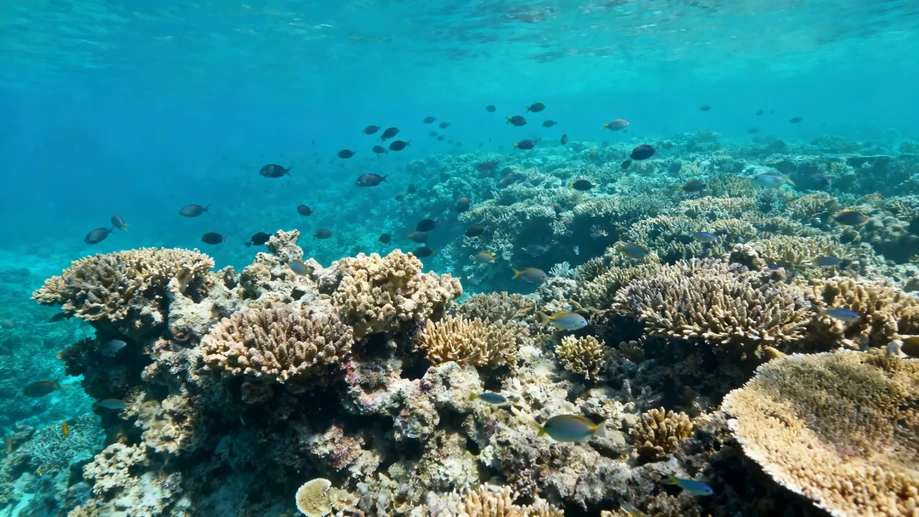
Swimming Through a Living Rainbow at Australia's Great Barrier Reef
Where the ocean floor transforms into an underwater galaxy of neon corals and dancing sea creatures
Imagine floating weightlessly above a city built by nature, where skyscrapers are replaced by towering coral cathedrals painted in electric blues and fiery oranges. This is the daily reality at Australia's Great Barrier Reef, the planet's largest living structure visible even from space. Stretching over 2,300 kilometers along Queensland's coastline, this natural marvel contains nearly 3,000 individual reefs and 900 islands, forming an aquatic empire larger than Italy. The reef isn't just a destination; it's a pulsating universe where sunlight filters through turquoise waters to illuminate a metropolis of marine biodiversity.
Descend beneath the surface, and you enter a realm that defies imagination. Giant clams with iridescent lips gape like living jewelry boxes, while parrotfish nibble on coral with beak-like teeth, their scales shimmering like liquid rainbows. Sea turtles glide past with prehistoric elegance, their flippers moving in slow motion through schools of technicolor fish that swirl like living confetti. In quieter corners, shy reef sharks patrol coral alleyways, and delicate seahorses cling to seagrass with curly tails. The reef's architecture constantly evolves as hard corals build limestone fortresses while soft corals dance in the current like underwater wildflowers.
Visitors become astronauts exploring this liquid cosmos through multiple portals. Snorkelers float above coral gardens where clownfish dart between anemone tentacles, their vibrant orange bodies contrasting against the purple fronds. Scuba divers venture deeper into canyons where manta rays soar with wingspans wider than humans, their shadows gliding across brain corals the size of cars. For those preferring to stay dry, glass-bottom boats reveal the spectacle below, while helicopter tours unveil the reef's mind-boggling scale as turquoise lagoons give way to deep blue drop-offs where the continental shelf plunges into abyssal darkness.
Here's a fascinating detail many miss: the reef's vivid colors actually come from tiny algae called zooxanthellae living inside coral polyps. These microscopic partners perform photosynthesis, feeding the coral while creating those spectacular neon hues. When corals experience stress, they expel these algae, causing the heartbreaking "bleaching" events that turn vibrant structures ghostly white. This delicate symbiosis reminds us how interconnected this ecosystem truly is - a reminder to tread lightly in this underwater wonderland.
Beyond its visual splendor, the reef serves as a crucial environmental barometer and marine nursery. Its mangrove-fringed islands provide breeding grounds for seabirds that fill the air with raucous cries, while shallow lagoons shelter juvenile fish before they venture into open ocean. Conservation efforts here employ innovative techniques like coral gardening, where fragments are nurtured on underwater frames before being transplanted to damaged areas. Responsible tourism practices ensure visitors minimize their footprint, whether by using reef-safe sunscreen or choosing eco-certified operators who contribute directly to preservation initiatives.
As day fades, the reef undergoes a magical transformation. Nocturnal creatures emerge as bio-luminescent plankton ignite the water with ethereal blue sparks, turning each movement into a trail of stardust. Standing on a catamaran under the Southern Cross, with the reef breathing beneath you and the ocean whispering against the hull, you understand why this living masterpiece captures hearts across generations. It remains Earth's most magnificent marine artwork - constantly evolving, infinitely fragile, and utterly unforgettable.