
Lucerne's Stone Sentinel Whispers Tales Beyond Its Guarded Walls
Editorial Team
VerifiedSenior Correspondent
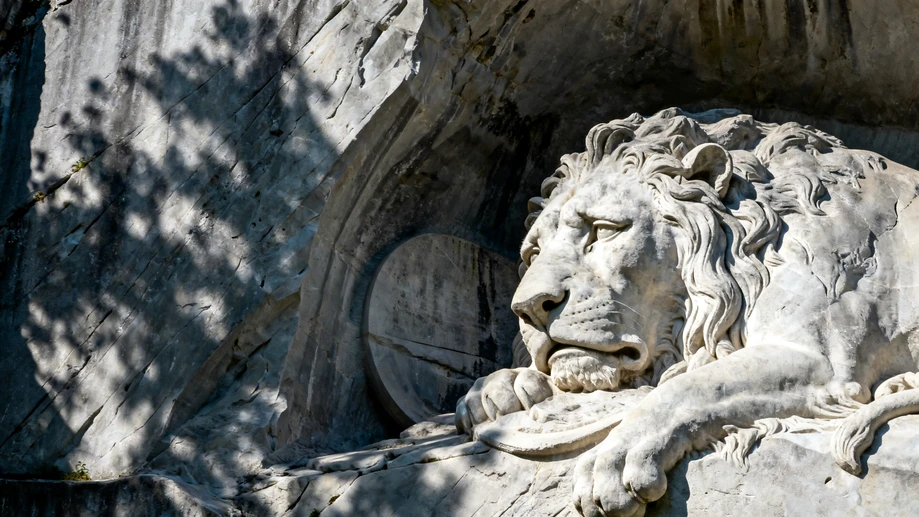
Lucerne's Stone Sentinel Whispers Tales Beyond Its Guarded Walls
Beneath the serene Alps, a lion carved in anguish tells a poignant story of sacrifice echoing through centuries
The soft murmur of the nearby Glacier Garden's ferns seems almost irreverent against the profound silence that envelops Lucerne's most arresting sight. Hewn directly into the face of a sheer sandstone cliff, nestled within a secluded park near the city center, lies the Löwendenkmal – the Lion Monument. This colossal figure of a dying lion, impaled by a broken spear, its majestic head slumped upon a shield bearing the fleur-de-lis, isn’t merely a sculpture. It is a wound carved into the living rock, a portal to a moment of devastating loss, forever frozen in time. The sheer scale of the work, combined with the raw emotion etched into its stone features, commands an immediate and visceral response. Visitors instinctively lower their voices; a hush descends, replacing the usual city buzz.
Mark Twain, upon seeing it, famously dubbed it "the most mournful and moving piece of stone in the world." It’s a sentiment that still resonates. The monument, conceived by Danish sculptor Bertel Thorvaldsen and brought painfully to life by Lukas Ahorn between 1820 and 1821, commemorates a specific tragedy: the heroic and ultimately futile defense of the Tuileries Palace in Paris by hundreds of Swiss Guards during the French Revolution on August 10, 1792. These mercenaries, bound by oath to protect King Louis XVI, were massacred. The lion symbolizes the fidelity and courage of these men who fought bravely despite knowing the cause was lost. His posture speaks not of defeat, but of noble resignation and enduring honor.
Despite its tragic genesis, the site draws people not only for remembrance but for a quiet contemplation that transcends its historical context. The shallow pool reflecting the monument’s image adds a layer of serene melancholy, doubling the lion’s noble sorrow on bright days. Sitting on the benches surrounding the pool, one can observe the play of light and shadow across the weathered rock face throughout the day. Morning sun bathes the lion in soft gold, highlighting intricate details like the muscle definition beneath the fur and the texture of the shield. By late afternoon, deep shadows gather in the hollows, amplifying the figure’s profound sadness. The constant drip of water from the cliff face above onto algae-covered rocks below provides the only sound, a rhythmic counterpoint to the visual stillness.
Many tourists cluster near the viewing platform for the perfect photograph, capturing the lion's profile against the framed backdrop of the cliff. Yet, the most profound experience often comes from lingering just off to the side, near the small, unassuming entrance. From this angle, framed by ancient trees, the monument feels even more integrated into its natural sanctuary, less like a man-made object and more like a sorrowful spirit of the mountain itself made manifest. The intimacy of this perspective allows the intricate details – the limp paw resting on the broken spear shaft, the subtle curve of the spine – to truly impact the observer, fostering a deep sense of shared humanity and loss across the centuries.
Lucerne itself bustles just beyond the park’s boundaries – the ancient Kapellbrücke (Chapel Bridge) creaking gently over the Reuss River, the charming pastel-colored guild houses lining the waterfront, the distant symphony of boat horns on Lake Lucerne. Yet, stepping into the clearing where the lion resides is like entering a sacred, timeless pocket. It serves as a powerful counterpoint to the city's vibrant life and stunning natural beauty. It reminds visitors that history, especially its most poignant chapters, is woven into the very fabric of the place. The monument compels a pause, a moment of reflection before diving back into the colourful streets, leaving one subtly changed by the silent, stoic grief of stone.
Few notice the subtle detail carved near the lion’s hindquarters: the shield protecting his flank morphs almost imperceptibly at the very end of his tail into another shield, this one bearing the distinct Swiss cross. This understated element, easily missed amidst the overwhelming central figure, holds profound significance. It’s a poignant reminder that the sacrifice of these mercenaries, fighting far from home under a foreign banner, was ultimately acknowledged and claimed by their native land. The double shield symbolism silently proclaims that their honor belongs to Switzerland as well. This small, often-overlooked feature encapsulates the duality of their service and identity, adding a layer of national pride to the overriding sadness, a whisper of home in their final, faraway battle.