
The Louvre Beckons: Unlocking Centuries of Art and Intrigue in Paris
Step beyond the glass pyramid into a realm where masterpieces whisper tales of revolution, royalty, and human genius.
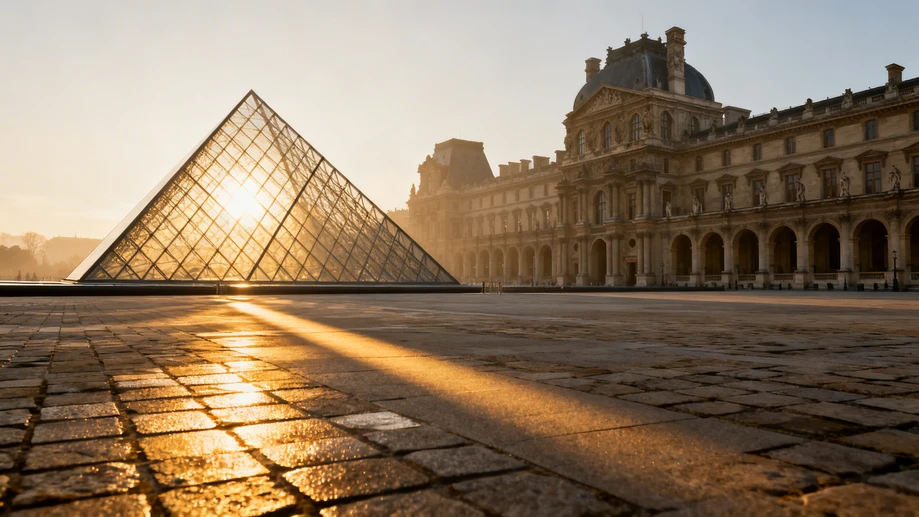
Imagine standing beneath I.M. Pei's iconic glass pyramid, sunlight fracturing into a thousand sparkling shards on the limestone courtyard. This modern gateway, once controversial, now perfectly symbolizes the Louvre's dual nature: a cutting-edge institution housing the ancient soul of Western civilization. As you descend into the vast underground lobby, the murmur of dozens of languages blends with the soft shuffle of feet on marble, an electric anticipation hanging in the cool air. You're not just entering a museum; you're crossing a threshold into eight centuries of turbulent history, where every corridor echoes with the footsteps of kings, revolutionaries, and countless awestruck visitors like yourself.
Before it safeguarded Mona Lisa's enigmatic smile, the Louvre wore many hats. Its very foundations rest upon the 12th-century fortress of Philippe Auguste, a formidable structure built to protect Paris from Viking raids along the Seine. Massive stone blocks from this medieval stronghold are still visible in the basement of the Sully Wing, a ghostly presence beneath the gilded galleries. Later transformed into a lavish royal residence by François I, the palace witnessed centuries of intrigue – from Catherine de' Medici's secret corridors to Louis XIV's glittering court balls. The museum we know only emerged after the French Revolution, when the terrified royal family fled and the people claimed the palace and its treasures as their own. Walking its halls, you tread upon layers of power struggles, artistic patronage, and seismic cultural shifts.
Navigating the Louvre's 15 acres requires strategy, but the rewards are unparalleled. The Denon Wing draws pilgrims to its holy trinity: the serene grace of the Winged Victory of Samothrace, dramatically poised at the top of the Daru staircase; the Venus de Milo, whose missing arms only enhance her timeless beauty; and finally, the climate-controlled sanctum holding Leonardo's Mona Lisa. While her small size behind thick glass might surprise first-timers, the collective gasp of the surrounding crowd is its own phenomenon. Yet the true magic often lies just steps away. Turn your back on La Gioconda, and you'll find yourself alone before Veronese's monumental Wedding Feast at Cana, or mesmerized by Delacroix's Liberty Leading the People, its revolutionary fervor still palpable. The key is to wander deliberately, allowing unexpected encounters – a delicate Fayum mummy portrait, a haunting Caravaggio, or the intricate Assyrian lamassu guardians.
Beyond the headline acts, the Louvre offers deeper, quieter revelations. The Richelieu Wing's opulent Napoleon III Apartments transport visitors to the Second Empire's decadent splendor, with gilded ceilings, crystal chandeliers, and plush velvet furnishings showcasing how the palace lived long after kings departed. The sprawling Egyptian antiquities section invites exploration of sarcophagi, hieroglyphic tablets, and the mesmerizing Seated Scribe, whose inlaid eyes seem to follow you across millennia. Few know that the museum's most peculiar artifact might be a 16th-century backscratcher, intricately carved from ivory and displayed amidst Renaissance finery – a humorous reminder of the very human needs behind the grandeur. This unexpected detail, tucked away in the decorative arts collection, highlights the museum's astonishing scope, encompassing everything from Mesopotamian law codes to Eugène Delacroix's paintbrushes.
As daylight fades, casting long shadows through the grand windows overlooking the Tuileries Gardens, the Louvre transforms once more. The crowds thin, and a contemplative hush descends. Standing before Jacques-Louis David's colossal Coronation of Napoleon, you can almost hear the rustle of silk and the swell of imperial ambition. The museum transcends being a mere repository of objects; it's a living chronicle of human aspiration, folly, creativity, and resilience. Emerging back under the glass pyramid, the Parisian twilight washing over the courtyard, you carry not just memories of art seen, but a profound connection to the endless, intricate tapestry of our shared past. The Louvre doesn't just display history; it lets you breathe it in, one magnificent, unforgettable gallery at a time.